
All Flow Meter Product List
#Rain Water Flow meter
Mechanical Flow Meters: These meters use a rotating element like a turbine or piston to measure flow. They are often analog, but some have digital readouts. They are typically durable and reliable for basic water or fuel measurement. Smaller sizes are common for residential or small-scale industrial use.
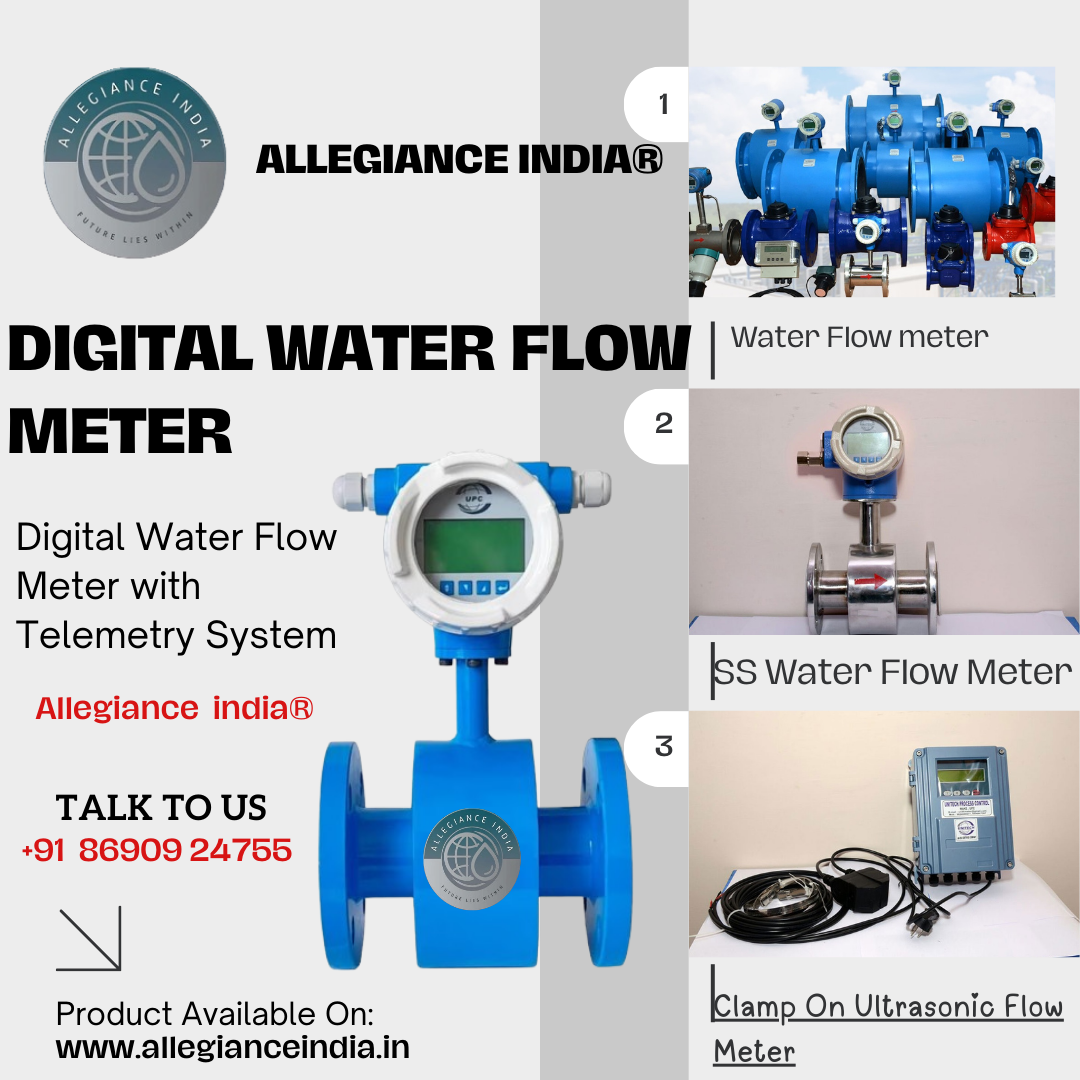
Digital Flow Meters: These meters use electronic sensors to measure flow and display the data digitally. They can provide high accuracy and often include features like totalizers, batch control, and data logging. They come in various types, including electromagnetic, ultrasonic, and vortex.
Vortex Flow Meters: These meters operate on the principle of vortex shedding. As fluid flows around a "bluff body" (a non-streamlined object), vortices are created. The frequency of these vortices is directly proportional to the flow velocity. They are ideal for applications where no moving parts are desired, such as for steam, gas, or corrosive liquids.
SS Material Flow Meters: These meters are made from Stainless Steel (SS), typically SS 304 or SS 316, making them highly resistant to corrosion. They are suitable for use with aggressive fluids, in high-temperature or high-pressure environments, and in hygienic applications like the food and beverage industry.
Key Locations for Suppliers
You can find suppliers for these flow meters in the following locations, which are known for their industrial and manufacturing presence in Gujarat and nearby regions:
#IndustrialCities #Maharashtra: Mumbai, Pune, Nashik #Gujarat: Ahmedabad, Vadodara, Surat, Rajkot, Bhavnagar, Navsari #DelhiNCR: Delhi, Gurgaon (Gurugram), Noida #Karnataka: Bengaluru (Bangalore) #TamilNadu: Chennai, Coimbatore, Sivakasi #Jharkhand: Jamshedpur, Ranchi #WestBengal: Kolkata, Haldia #AndhraPradesh: Visakhapatnam, Guntur #UttarPradesh: Kanpur #Punjab: Ludhiana #MadhyaPradesh: Bhopal #Telangana: Hyderabad