
With groundwater levels falling
in many residential areas, more homeowners are turning to residential
rooftop rainwater harvesting as a simple, low-cost way to conserve water.
This guide explains what residential rainwater harvesting is, how it works for
homes, and why it is one of the most practical steps a household can take
toward sustainable water use.
What is Residential Rooftop Rainwater Harvesting?
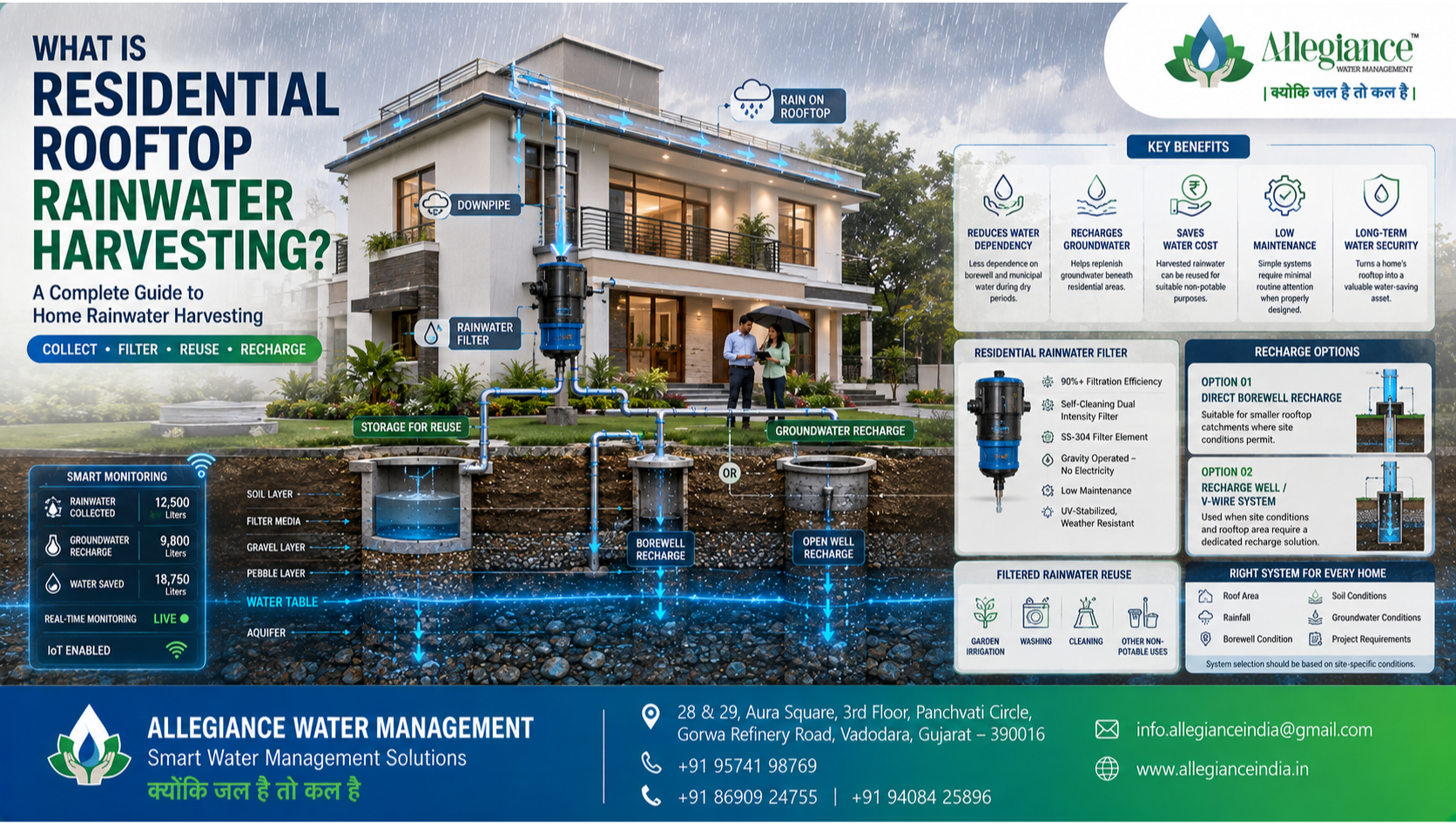
Residential rooftop rainwater
harvesting is the process of collecting rainwater from a home's roof and
channeling it through a filter into storage for reuse, or directing it to
recharge the borewell or an open well. It allows households to make productive
use of rainfall that would otherwise run off into drains, while also helping
recharge the groundwater table beneath residential neighborhoods.
How Rainwater Harvesting Works for Homes
Rainwater collected from the
rooftop flows through downpipes into a compact rainwater filter, which removes
dirt and debris before the water is used or recharged. Depending on the size
and layout of the home, residential systems typically apply one of these
methods:
•
Storing filtered rainwater in an underground sump for
reuse in gardening, washing, or cleaning
•
Recharging the borewell by connecting filtered water
directly to the casing pipe, ideal when roof area is less than 100 square
metres
•
Recharging the borewell through V-wire technology when
roof area is more than 100 square metres
•
Recharging an open well with filtered rainwater
The right option for a home depends on roof area and how the
existing borewell behaves. If water percolates too quickly or the well
overflows during heavy rain, a dedicated recharging well is usually the better
solution.
Rainwater Filters for Residential Use
Residential rainwater harvesting
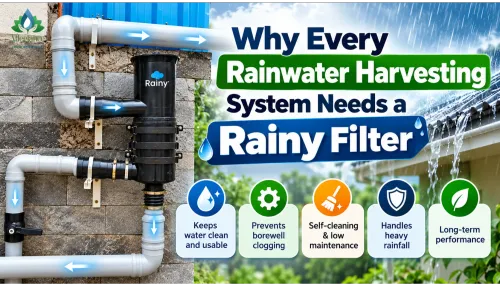
filters are designed to be compact, easy to install, and virtually
maintenance-free. Key features include:
•
Self-cleaning dual intensity filter that flushes out
dirt and debris automatically
•
Filtration efficiency above 90 percent
•
SS-304 multi-surface, food-grade filter element
•
UV-treated high-density polyethylene housing for
long-term outdoor use
•
Gravity-powered operation, requiring no electricity
•
Compact size suitable for homes and small residential
plots
Residential filter units are typically sized for roof areas
ranging from around 120 square metres to 350 square metres, handling rainfall
intensity of up to 75 mm per hour with discharge rates between 120 LPM and 340
LPM depending on the model chosen.
Why Homeowners Should Consider Rainwater Harvesting
•
Reduces dependency on borewell water and municipal
supply during summer months
•
Helps recharge groundwater levels in residential
neighborhoods
•
Lowers water bills through reuse of harvested rainwater
•
Simple, low-maintenance system that requires no daily
attention
•
Supports local water conservation efforts and builds
long-term water security
Setting Up a System at Home
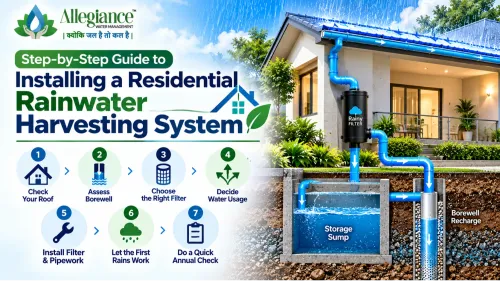
Installing a residential
rainwater harvesting system usually starts with assessing the roof area,
checking the condition of the existing borewell, and choosing between direct
recharge, filtered reuse, or a combination of both. A short feasibility check by
a water management professional can help determine the right filter size and
recharge method for the home's specific conditions.
Conclusion
Residential rooftop rainwater
harvesting is an easy, affordable way for homeowners to conserve water,
recharge groundwater, and reduce reliance on external water sources. With a
simple filter and the right recharge setup, any home can turn its rooftop into
a valuable water-saving asset.