
Every effective rainwater
harvesting system depends on one critical component: the filter. A Rainy
filter is a specialized rooftop rainwater filter designed to remove dirt,
leaves, and debris before water is stored, reused, or recharged into the
ground. This guide explains what a Rainy filter is, how it works, and why it is
central to any rainwater harvesting filter setup.
What is a Rainy Filter?
A Rainy filter is a rooftop
rainwater harvesting filter that sits inline with the downpipe of a building,
capturing rainwater as it flows off the roof. It separates clean water from
dirt and debris using an open-ended, non-clog filtration design, allowing
filtered water to pass through for storage, reuse, or groundwater recharge,
while unwanted material is automatically flushed out.
How a Rainy Filter Works
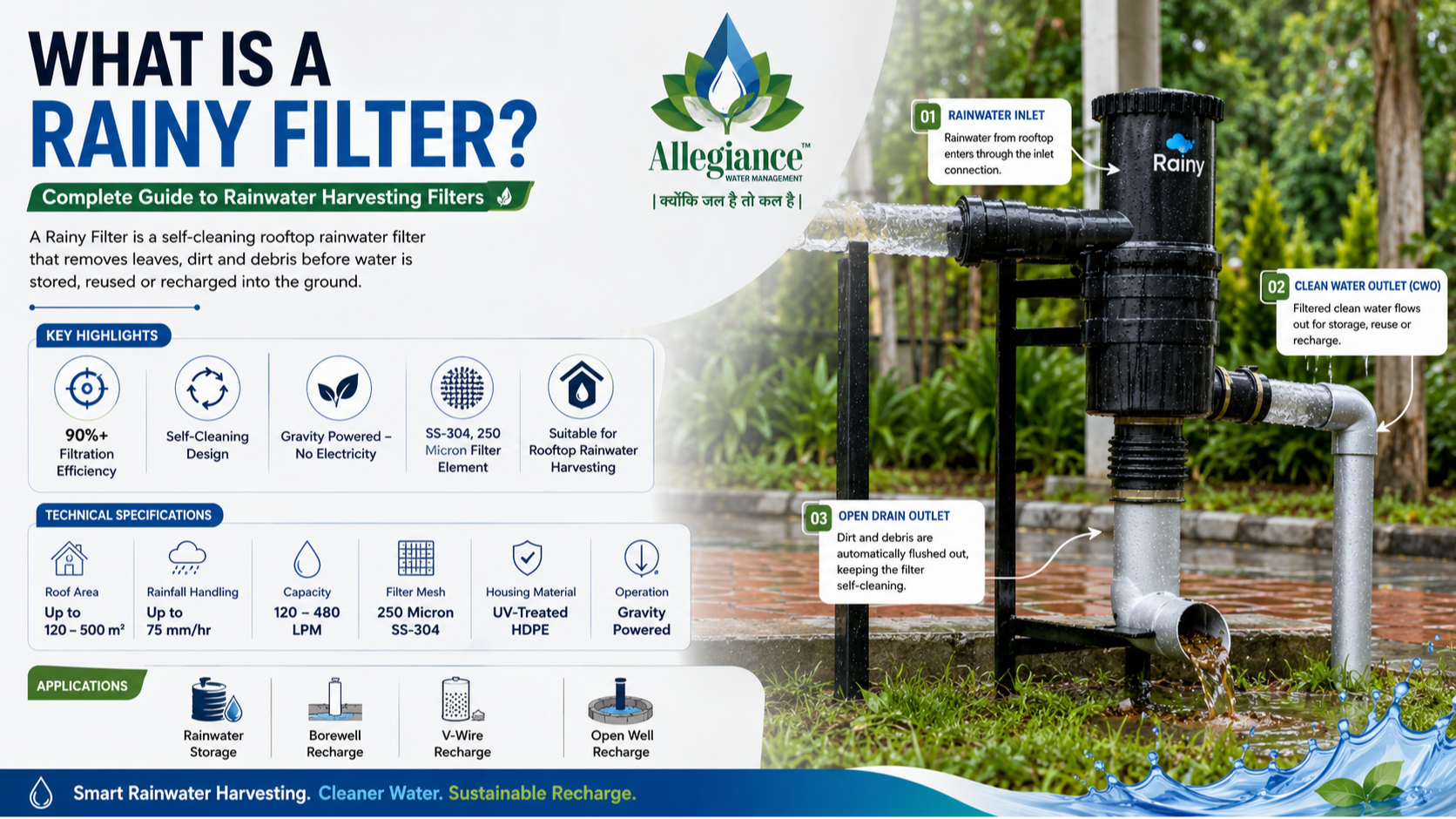
The filter operates on a simple
three-stage process:
•
Rainwater inlet: Water from the rooftop enters the
filter through the inlet connection
•
Filtered water outlet: Clean water passes through the
filter element and exits through the Clean Water Outlet (CWO) for reuse or
recharge
•
Open drain outlet: Dirt and debris are automatically
flushed out through the drain outlet, keeping the filter self-cleaning
This process relies on cohesive force and centrifugal force
rather than electricity, meaning the filter operates purely on gravity with a
minimum operating pressure of just over 1 foot of gravity head.
Key Technology and Innovation Highlights
•
Self-cleaning dual intensity filter for continuous,
low-maintenance operation
•
High filtration efficiency, typically above 90 percent
under standard conditions
•
Extremely versatile and compact design suitable for
different rooftop sizes
•
Superior built quality using UV-treated, high-density
polyethylene housing
•
Easy to install with minimal plumbing changes
•
Strong value for money compared to manual or mechanical
filtration systems
Technical Specifications
Rainy filters are available in
multiple models to match different roof areas and rainfall intensities. Key
specifications include:
•
Roof area coverage ranging from up to 120 square metres
to 500 square metres per unit
•
Rainfall intensity handling of up to 75 mm per hour
•
Maximum discharge capacity ranging from 120 LPM to 480
LPM depending on the model
•
Filter element made from SS-304 multi-surface,
food-grade material with a 250-micron mesh size
•
Filter housing constructed from UV-treated high-density
polyethylene
•
Gravity-powered operation with no external power source
required
Where Rainy Filters Are Used
Rainy filters are suitable
across residential, commercial, and industrial rooftop rainwater harvesting
applications. Common uses include:
•
Storing filtered rainwater in underground sumps for
reuse
•
Recharging borewells directly by connecting to the
casing pipe
•
Recharging borewells through V-wire technology for
larger roof areas
•
Recharging open wells with filtered rainwater
Why the Right Filter Matters
Choosing the correct Rainy
filter model depends on roof area, expected rainfall intensity, and the
intended use of the harvested water. A filter that is undersized for the roof
area can lead to overflow and reduced filtration efficiency, while an oversized
unit adds unnecessary cost. Matching the filter model to the site ensures
consistent performance across every monsoon season.
Conclusion
A Rainy filter is the
foundation of any reliable rainwater harvesting system, combining self-cleaning
technology, high filtration efficiency, and gravity-powered operation into a
compact, low-maintenance unit. Whether for a home, commercial building, or industrial
facility, selecting the right filter model is the first step toward making
rooftop rainwater harvesting truly effective.