
Here's something most people
never think about until their borewell starts running dry: the water
underground isn't an endless supply, it's a resource that has to be managed,
the same way you'd manage a bank account. Groundwater management is
simply the practice of making sure we don't withdraw more than nature can put
back. It sounds straightforward, but it touches everything from how deep your
borewell goes to whether your neighborhood still has water in May.
So What Does It Actually Mean?
At its core, groundwater
management is about balance. Rain and surface water naturally seep into the
ground and recharge the aquifers beneath us, while borewells, tubewells, and
wells pull that water back out for drinking, farming, and industry. When extraction
stays roughly in line with recharge, the system stays healthy. When it doesn't,
water tables drop, wells run dry, and in some areas, land can even start to
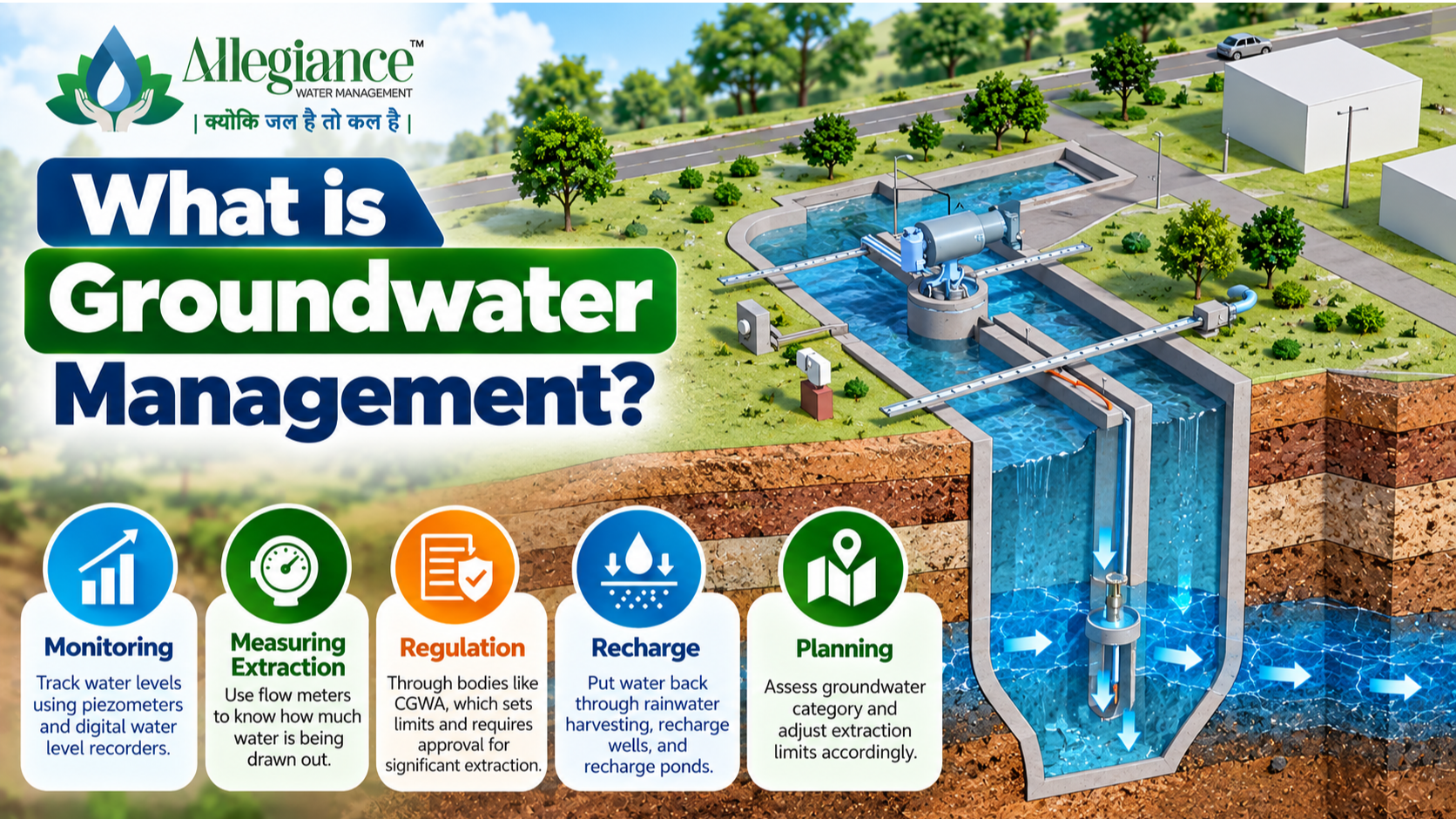
sink. Groundwater management is the set of practices, from monitoring to
regulation to active recharge, that keeps this balance from tipping too far in
one direction.
Why This Has Become Such a Big Deal
Groundwater isn't some backup
water source anymore, it's the primary supply for a huge share of households,
farms, and industries, especially in areas where municipal supply doesn't reach
or doesn't cover demand. The trouble is, groundwater is invisible. You can't
see an aquifer shrinking the way you can watch a reservoir drop. By the time a
borewell starts yielding less water, the underlying stress has often been
building for years. That's exactly why active management, not just reactive
drilling deeper, matters so much.
The Main Pieces of Groundwater Management
Good groundwater management
usually involves a few things working together, not just one silver-bullet
solution:
•
Monitoring, keeping track of how water levels change
over time using tools like piezometers and digital water level recorders
•
Measuring extraction, using flow meters to know exactly
how much water is actually being drawn out
•
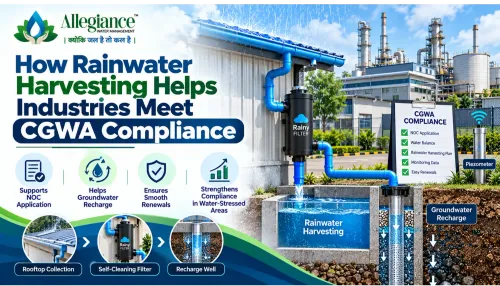
Regulation, through bodies like the Central Ground
Water Authority, which sets limits and requires approval for significant
extraction
•
Recharge, actively putting water back through rainwater
harvesting, recharge wells, and recharge ponds
•
Planning, assessing an area's groundwater category and
adjusting extraction limits accordingly
Monitoring: You Can't Manage What You Can't Measure
This is where a lot of
groundwater management quietly happens. A piezometer, essentially a digital
water level recorder, tracks how the water level in a borewell or observation
well changes over weeks, months, and years. That data tells you whether an aquifer
is recovering, holding steady, or steadily declining, long before anyone
notices a dry well. Pair that with a flow meter on the extraction side, and you
get a complete picture: how much is going out, and how the aquifer is
responding.
Recharge: Putting Water Back Where It Belongs
Monitoring tells you there's a
problem, but recharge is how you actually fix it. Rooftop rainwater harvesting,
recharge wells using V-wire injection technology, and recharge ponds all work
by taking water that would otherwise run off into drains and sending it back
underground instead. Even rejuvenating a defunct, dried-up borewell can turn it
into a functioning recharge point rather than abandoning it entirely. None of
this reverses decades of overuse overnight, but done consistently, it genuinely
moves the needle.
Who's Actually Responsible for This?
In a way, everyone is, but at
the regulatory level, the Central Ground Water Authority carries much of the
weight in India. It classifies groundwater blocks by how stressed they are,
Safe, Semi-Critical, Critical, or Over-Exploited, and uses that classification
to decide how much extraction gets approved in a given area. Industries,
developers, and large commercial users are typically the ones required to get
formal clearance, while households generally extract water without needing the
same level of approval, though the underlying resource is shared by everyone
regardless.
What This Means for Businesses and Homeowners
If you run a facility that
draws groundwater, good management isn't just a compliance checkbox, it's what
keeps your own water source viable for the long run. If you're a homeowner,
even something as simple as a rooftop rainwater harvesting system contributes
to the same cause at a smaller scale. Groundwater doesn't respect property
lines, so an aquifer recharged by one home or one facility benefits the whole
area around it.
The Bottom Line
Groundwater management isn't a
complicated idea once you break it down, it's just the ongoing work of making
sure we don't take more from the ground than we're willing to put back. Between
monitoring, recharge, and sensible regulation, it's entirely possible to keep
aquifers healthy even as demand for water keeps growing. The real challenge is
making sure enough people, and enough facilities, actually follow through on
it.
Where to Start
Whether you're trying to
understand your own borewell's health, planning a rainwater harvesting system,
or navigating CGWA requirements for a facility, a proper groundwater
consultation, starting with a geohydrological survey, is usually the clearest
way to see exactly where you stand.
Contact Us
Phone: 9574198769
Email: info.allegianceindia@gmail.com
Website: www.allegianceindia.in