
If you've ever watched a good
monsoon downpour and thought, "that's a lot of water just running off
my roof," you're not wrong, and you're not alone. A residential rainwater harvesting system is one of the simplest ways to put that water
to work instead of watching it disappear into the drain. Here's what actually
goes into setting one up at home, explained in plain terms rather than
technical jargon.
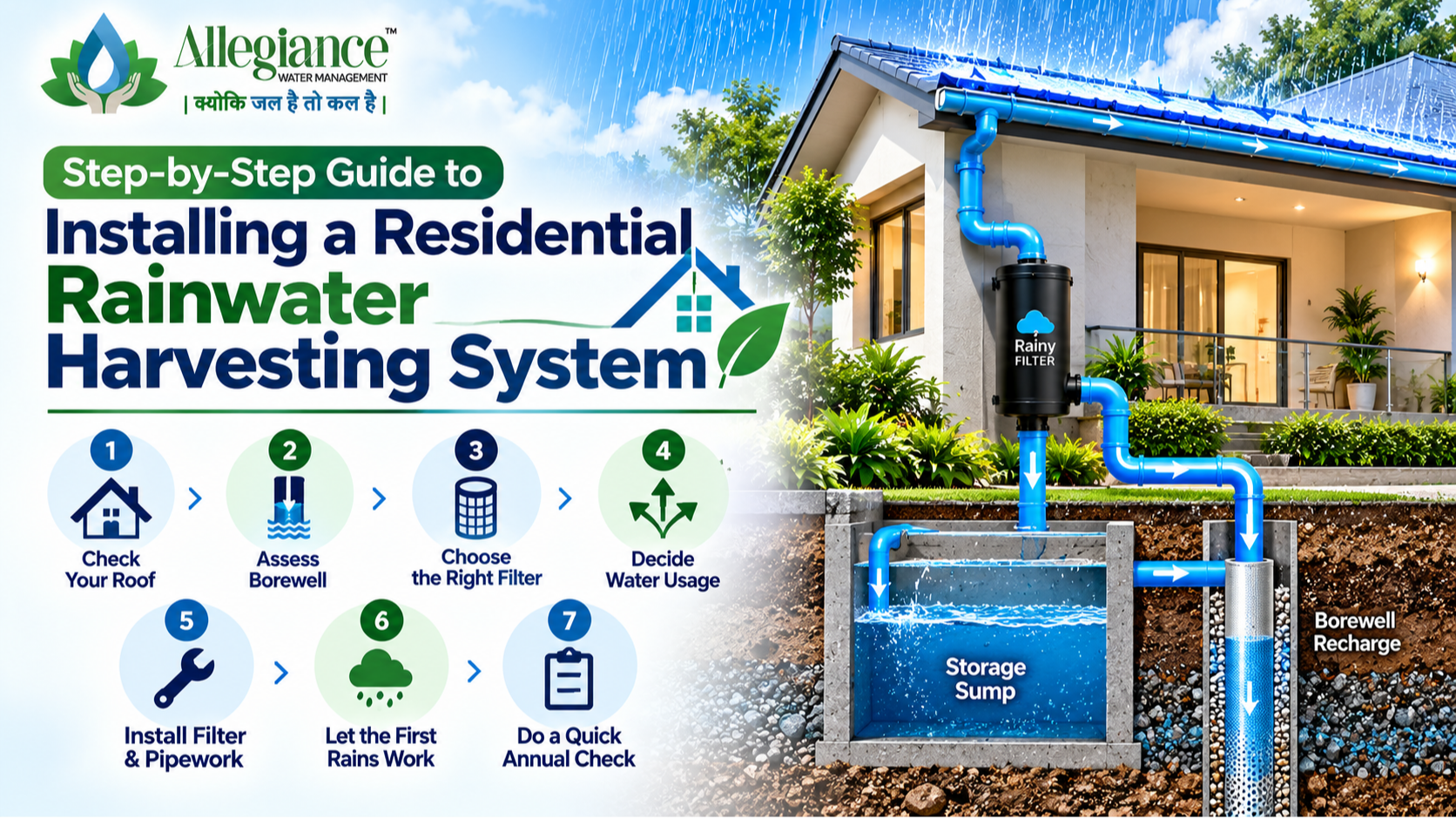
Step 1: Take a Good Look at Your Roof
Before anything else, figure
out roughly how much roof area you're working with. This matters more than
people expect, because it decides which filter model suits your home and how
much water you can realistically harvest each monsoon. A small independent
house and a large bungalow with multiple roof sections will need different
setups, so this first step saves you from guessing later.
Step 2: Check on Your Existing Borewell
If you already have a borewell,
it's worth understanding how it behaves. Does water percolate through it
reasonably well, or has it tended to overflow during heavy rain in the past?
This tells you whether direct recharge through the casing pipe will work, or
whether you'd be better off with a dedicated recharging well instead. It's a
small detail, but it makes a real difference to how well the system performs
down the line.
Step 3: Choose the Right Filter for Your Roof Size
This is where the actual
filtration happens. A rooftop rainwater filter, like the Rainy filter, is
designed to sit inline with your existing downpipe and separate clean water
from dirt, leaves, and debris automatically. Filters are available for roof areas
ranging from around 120 square metres up to 500 square metres, so there's a
model that fits most homes without needing anything custom-built.
Step 4: Decide Where the Water Should Go
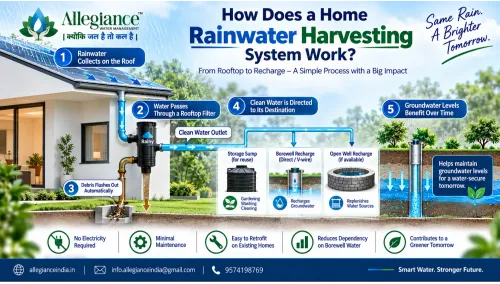
Once the water is filtered, you
get to decide what happens next, and there's more than one good option here:
•
Store it in an underground sump and reuse it for
gardening, washing, or general cleaning
•
Send it straight into the borewell casing pipe if your
roof area is under 100 square metres
•
Route it through V-wire technology into the borewell if
your roof area is larger
•
Recharge an open well, if that's what your home has
instead of a borewell
Most homeowners end up doing a bit of both, some storage for
daily use, and some recharge to keep the groundwater table healthy.
Step 5: Install the Filter and Connect the Pipework
The actual installation is
usually quicker and less disruptive than people expect. Since the filter
connects to your existing downpipe, there's no need to tear up your roof or
redo your plumbing. A technician will fit the filter inline, connect the clean
water outlet to your chosen destination, whether that's a sump or the borewell,
and make sure the drain outlet for flushed-out debris is properly directed.
Step 6: Let the First Few Rains Do Their Job
Once installed, the system runs
entirely on gravity, no switches to flip, no electricity to worry about. The
first monsoon after installation is a good time to keep half an eye on things,
just to confirm water is flowing where it should and the self-cleaning filter
is flushing debris out as expected. After that, it largely takes care of
itself.
Step 7: Do a Quick Check Before Every Monsoon
The system is low maintenance,
not zero maintenance. Before the rains set in each year, it helps to give the
filter a quick visual check, make sure the inlet and outlet aren't obstructed,
and confirm nothing has shifted or come loose over the dry months. A few
minutes of attention once a year goes a long way toward keeping the system
reliable.
Why It's Worth the Effort
It's easy to underestimate what
a single rooftop can do over a full monsoon season. Homes that recharge their
borewells consistently tend to notice the difference by the time summer comes
around, when neighbors are calling tankers and their own borewell is still
holding up reasonably well. It's not a dramatic transformation, just a steady,
quiet improvement that adds up year after year.
Getting Started
If you're not sure which filter
or recharge method suits your home, that's completely normal, most homeowners
aren't. A short site visit is usually enough to work out the roof area, check
the borewell's behavior, and recommend a setup that fits both your home and
your budget.
Contact Us
Phone: 9574198769
Email: info.allegianceindia@gmail.com
Website: www.allegianceindia.in