
People sometimes assume
rainwater harvesting is just about redirecting a pipe into the ground, and skip
the filter to save a bit of money. It rarely works out well. Without a proper
filter, you're not harvesting rainwater, you're just sending roof dirt, leaves,
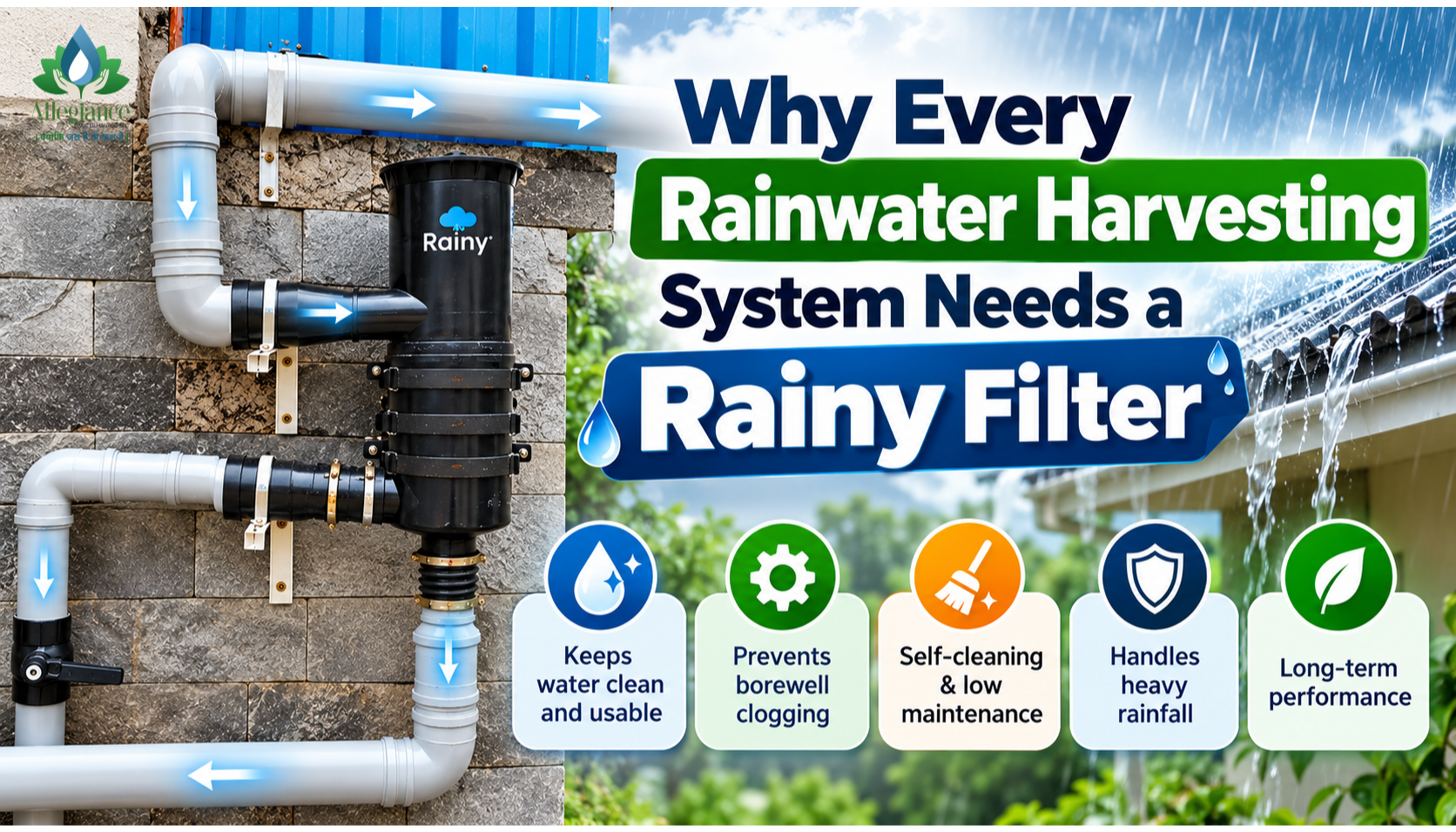
and bird droppings straight into your borewell or storage tank. A Rainy filter is the part of the system that actually makes the whole idea work,
and here's why it genuinely isn't optional.
Your Roof Is Dirtier Than You Think
Even a roof that looks clean
collects dust, dried leaves, bird droppings, and general grime between rains.
The first flush of any downpour carries all of that straight down your pipe.
Without filtration, that debris either clogs your borewell casing over time or
ends up sitting in your storage sump, which defeats the purpose of harvesting
clean water in the first place.
A Clogged Borewell Is an Expensive Mistake
This is the part that really
gets people. Recharging a borewell with unfiltered water sounds harmless until
silt and debris start accumulating inside the casing, reducing how well the
well can absorb water, or worse, affecting its yield. Fixing a clogged borewell
costs far more than installing a decent filter would have in the first place. A
Rainy filter removes this risk by keeping debris out before it ever reaches the
casing pipe.
It Does the Cleaning So You Don't Have To
What sets a Rainy filter apart
from a basic mesh screen is the self-cleaning dual intensity design. Using
cohesive force and centrifugal force, it separates clean water from debris
continuously while it rains, and flushes the dirt straight out through its own
drain outlet. You're not climbing onto the roof every few weeks to clear out a
clogged screen, the filter handles it automatically, every single time it
rains.
No Electricity Means No Excuses
A lot of water treatment
equipment needs power to function, which means it stops working exactly when a
storm knocks the electricity out. A Rainy filter runs purely on gravity, with a
minimum operating pressure of just over 1 foot of gravity head. It keeps
filtering water whether the power is on or off, which, frankly, is when you
need it working the most.
It's Built to Actually Survive Outdoors
The filter housing is made from
UV-treated, high-density polyethylene, so sun exposure year after year doesn't
make it brittle or crack it open. The filter element itself is SS-304
multi-surface, food-grade material, which holds up to continuous outdoor use
far better than the cheap plastic mesh you'll find in generic alternatives.
It Keeps Filtering Even When the Rain Gets Heavy
A filter that works fine in
light drizzle but overflows during a real downpour isn't doing its job. Rainy
filters are rated to handle rainfall intensity of up to 75 mm per hour, with
discharge capacities ranging from 120 LPM to over 480 LPM depending on the
model, which means it keeps up with your roof even when the monsoon decides to
get serious.
There's a Model for Every Roof
This isn't one-size-fits-all
equipment. Filters are available covering roof areas from around 120 square
metres right up to 500 square metres per unit, so whether you've got a modest
home or a sprawling industrial shed, there's a model sized to match, rather
than forcing a small filter to handle more water than it was built for.
What You'd Be Giving Up Without One
•
A borewell that stays clear and functional for longer
•
Storage water that's actually usable without visible
sediment
•
A system that doesn't need constant manual cleaning
•
Protection against the heaviest rainfall your roof will
see
•
A rainwater harvesting setup that still performs well
in five or ten years
The Bottom Line
Skipping the filter to cut
costs on a rainwater harvesting system is a bit like buying a car without
brakes to save money, it works right up until it really doesn't. A Rainy filter
is the one component that decides whether your system actually delivers clean,
usable water or just sends roof grime straight into your groundwater. It's not
an add-on, it's the part that makes everything else worth doing.
Not Sure Which Model You Need?
Matching the right filter to
your roof area takes just a quick look at your property, so you're not stuck
guessing between models. It's worth getting right the first time, since this is
the piece that keeps the rest of your system running smoothly for years.
Contact Us
Phone: 9574198769
Email: info.allegianceindia@gmail.com
Website: www.allegianceindia.in