
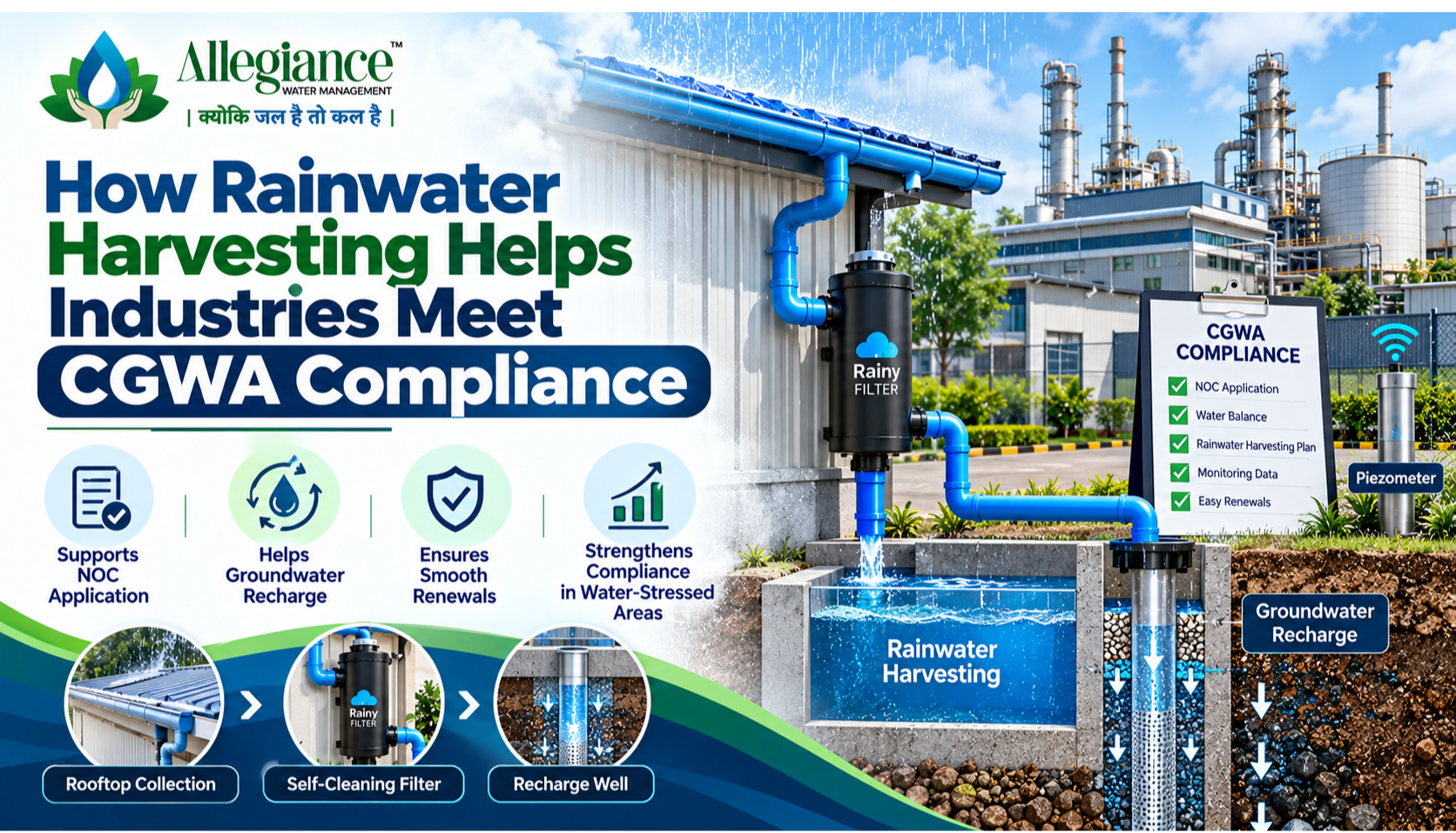
Talk to most plant managers
about CGWA, and water conservation often comes up as the trickiest part of the
whole approval process. It's one thing to install a flow meter or file
paperwork, it's another to actually show that your facility is putting water
back where it takes it from. This is exactly where rainwater harvesting
earns its place, not as a side project, but as a genuine part of how industries
satisfy CGWA's expectations. Here's how the two actually connect.
Conservation Isn't Optional Anymore
CGWA doesn't just want to know
how much water you're pulling out of the ground, it wants to see what you're
doing to put some of it back. A rainwater harvesting system is usually the most
straightforward, visible way to demonstrate that. It shows up in site
inspections, it shows up in photographs submitted with your application, and it
shows up in the water balance figures you report.
It Directly Strengthens Your NOC Application
When you apply for a CGWA NOC,
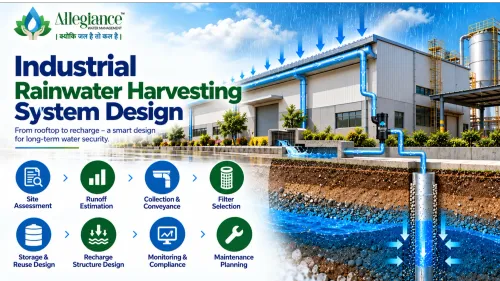
you're expected to submit a rainwater harvesting plan alongside your water
balance chart. An application that shows a properly designed system, roof area
covered, filter capacity, and recharge method, carries far more weight than one
that treats this as an afterthought. It tells the reviewing officer that your
extraction request is paired with a real, functioning offset, not just good
intentions on paper.
It Helps With Renewals Too, Not Just the First Approval
This is the part people
sometimes miss. Renewal applications require a self-compliance report
confirming that your rainwater harvesting structures are still functional, not
just that they were built once. Facilities that maintain their filters, clean
their recharge wells, and keep photographic records year after year tend to
sail through renewal far more smoothly than those scrambling to prove a system
still works after years of neglect.
It Gives You an Answer When Groundwater Gets Harder to Access
In areas classified as
Semi-Critical, Critical, or Over-Exploited, CGWA puts tighter restrictions on
new extraction and expansion. Facilities in these zones are often expected to
show stronger recharge measures to justify any extraction at all. A well-designed
rainwater harvesting system, particularly one using V-wire injection wells or
recharge ponds, becomes part of the case for why your facility should still be
permitted to draw water despite the area's stressed status.
The Technology Behind the Compliance Story
None of this works if the
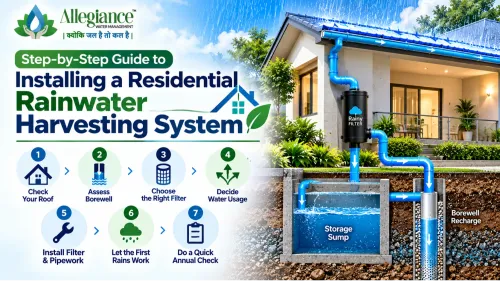
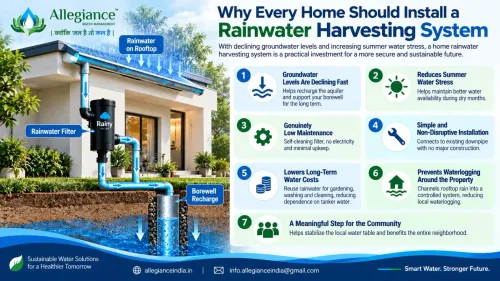
system itself isn't reliable. A self-cleaning rooftop filter, like the Rainy
filter range, keeps operating without constant manual attention, which matters
a lot when your compliance depends on the system actually running, not just
existing. These filters handle roof areas from around 120 square metres up to
500 square metres, filter at above 90 percent efficiency, and run entirely on
gravity, so there's no power outage or pump failure to worry about undermining
your compliance record.
It Pairs Naturally With Monitoring Requirements
CGWA increasingly wants to see
monitoring data alongside conservation measures. A piezometer tracking
groundwater levels near your recharge structure, combined with a CGWA-compliant
flow meter on your extraction point, builds a genuine before-and-after picture.
You're not just claiming the recharge system works, you have the water level
data to back it up.
What This Looks Like in Practice
•
A rooftop filter capturing rain before it reaches the
borewell casing or a recharge well
•
A documented water balance showing extraction offset by
recharge volume
•
Piezometer data showing stable or improving groundwater
levels nearby
•
Photographs and maintenance logs ready for the next
renewal cycle
•
A system that's actually running, not just installed
and forgotten
The Honest Takeaway
Rainwater harvesting won't make
your CGWA paperwork disappear, there's still a process to follow. But it does
change the conversation from "why should we let you extract this much
water" to "here's what this facility is already doing to offset
it." That shift matters, both for getting approved the first time and for
staying approved every renewal after that.
If You're Not Sure Where to Start
A feasibility survey is usually
the right first step, it tells you how much roof area you're working with, what
your existing groundwater infrastructure looks like, and which recharge
approach makes sense for your site. From there, building a system that actually
holds up to CGWA scrutiny becomes a lot more straightforward.
Contact Us
Phone: 9574198769
Email: info.allegianceindia@gmail.com
Website: www.allegianceindia.in