
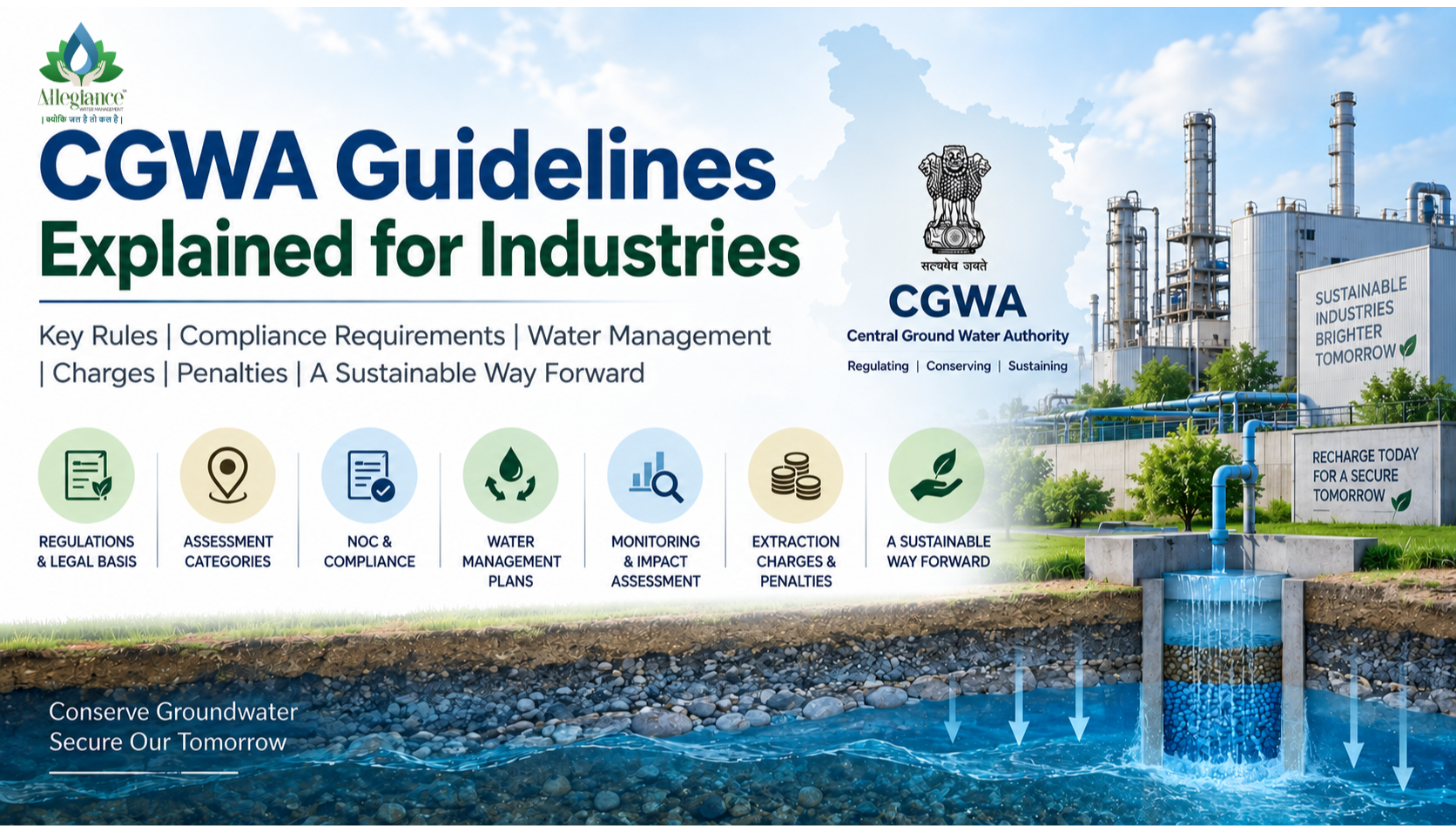
Groundwater extraction in India
is governed by a detailed and evolving set of CGWA guidelines that
determine how much water an industry can draw, what documentation it must
maintain, and what obligations follow after approval. This guide breaks down
the core guidelines every industry should understand before extracting
groundwater.
The Legal Basis of CGWA Guidelines
The Central Ground Water
Authority was constituted under Section 3 of the Environment (Protection) Act,
1986, with a mandate to regulate groundwater abstraction, usage, and monitoring
across India. Its guidelines apply pan-India, and in states without their own
groundwater regulatory framework, CGWA remains the primary authority. The
current framework builds on revised guidelines notified in September 2020,
which continue to shape how industries, infrastructure developers, and mining
projects access groundwater today.
Groundwater Assessment Categories
CGWA classifies India's
groundwater assessment units into four categories based on the ratio of
extraction to recharge:
•
Safe: Extraction remains well within the annually
replenished recharge
•
Semi-Critical: Extraction reaches roughly 70 to 90
percent of recharge
•
Critical: Extraction reaches 90 to 100 percent of
recharge
•
Over-Exploited: Extraction exceeds the recharge rate,
placing the area under significant stress
Semi-Critical, Critical, and Over-Exploited units are together
referred to as OCS areas, and guidelines are considerably stricter for
industries operating within them.
Restrictions in Over-Exploited Areas
Under the current guidelines,
new industries generally cannot obtain an NOC for groundwater abstraction in
Over-Exploited assessment units, with limited exceptions for eligible micro,
small, and medium enterprises. Even qualifying MSMEs face exclusions, such as
new packaged drinking water units, which are not permitted regardless of size.
Expansion of an existing industry's groundwater abstraction is also restricted
in these zones, making alternative water sources and recharge measures
essential for continued operations.
Mandatory Water Management Plans
Organizations operating in
Over-Exploited, Critical, or Semi-Critical units are required to prepare a
detailed water management plan as part of their compliance obligations. This
plan typically documents water sourcing, consumption patterns, recycling measures,
and the artificial recharge structures in place to offset extraction.
Impact Assessment and Monitoring Requirements
Guidelines require industries
proposing groundwater extraction above defined thresholds in Over-Exploited,
Critical, or Semi-Critical units to submit an impact assessment report
evaluating the effect of withdrawal on the local groundwater regime, including
socio-economic considerations. For qualifying abstraction outside designated
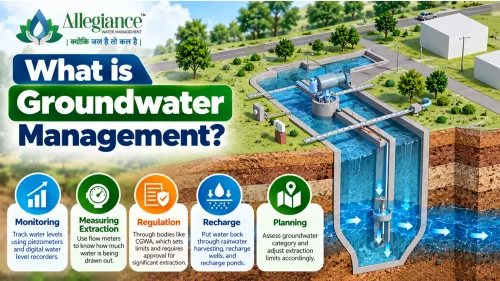
industrial areas, groundwater-level monitoring through observation wells or
piezometers is also prescribed, allowing regulators to track the aquifer's
response independently of the production borewell.
Groundwater Extraction Charges
Industries, mining projects,
and infrastructure developments drawing groundwater in safe, semi-critical,
critical, or over-exploited units are required to pay groundwater abstraction
charges based on the volume extracted. Entities that have installed compliant
artificial recharge structures, in line with the conditions attached to their
NOC or renewal, may receive relief or adjustments recognizing their
conservation contribution.
Borewell Drilling and Local Permissions
Beyond the CGWA NOC itself,
permission from the relevant state government or local authority is generally
required before drilling a new borewell. Housing societies and resident
apartment complexes in urban areas are also brought within the guideline framework
and must obtain an NOC for groundwater withdrawal above prescribed thresholds.
Penalties and Environmental Compensation
The guidelines introduced the
concept of environmental compensation for illegal or unauthorized groundwater
extraction, alongside enforcement actions from local authorities. Industries
operating without a valid NOC, or extracting beyond approved limits, risk
financial penalties, disconnection notices for extraction infrastructure, and
closure orders in serious cases.
What This Means for Your Industry
Whether your facility sits in a
Safe zone or an Over-Exploited unit, the direction of CGWA's guidelines is
consistent: extraction must be measured, monitored, and offset through
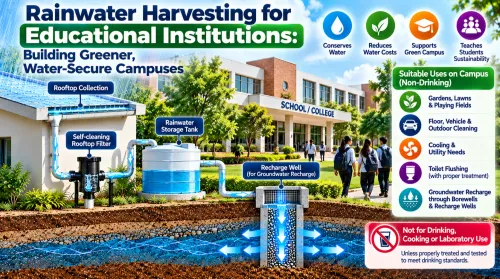
recharge. Rooftop rainwater harvesting, artificial recharge wells, CGWA-compliant
flow meters, and groundwater level monitoring are no longer optional add-ons
but core components of a compliant industrial water strategy.
Conclusion
CGWA guidelines have grown
steadily more stringent since 2020, with tighter category-based restrictions,
mandatory water management plans, and stronger enforcement. Industries that
build compliance into their water infrastructure early, through recharge systems,
monitoring devices, and proper documentation, are far better positioned to
secure and retain NOC approval as regulations continue to evolve.