
A hospital never really
switches off. Wards, laundries, kitchens, cooling systems, and cleaning crews
are using water around the clock, and when supply runs short, it is not an
inconvenience, it is a risk. That is why rainwater harvesting for hospitals is getting serious attention from administrators and facility heads. Here is
how it works in a healthcare setting, and how to do it sensibly.
Why Hospitals Need Rainwater Harvesting and Water Conservation
Large hospitals typically have
big roof areas, extensive paved surroundings, and a heavy daily water demand.
Many also run their own borewells to keep supply steady. That combination makes
them natural candidates for rainwater harvesting: plenty of rooftop to collect
from, and plenty of reasons to reduce the pressure on groundwater and tanker
supply, especially during dry months.
Where Harvested Rainwater Can Be Used Safely in a Hospital
This is the part that deserves
a straight answer. Hospitals have strict infection control and water quality
standards, so harvested rainwater should be kept well away from clinical areas,
patient care, and anything that touches patients directly. The sensible uses
are the non-clinical ones:
•
Cooling tower and HVAC make-up water
•
Garden, lawn, and green belt irrigation on the campus
•
External washdown, parking, and driveway cleaning
•
Fire hydrant system storage and top-up
•
Groundwater recharge through borewells or recharge
wells
If a hospital ever wants to use harvested water for anything
more sensitive, it should go through proper treatment, such as an RO plant, and
be cleared by the infection control and quality teams first.
How a Hospital Rooftop Rainwater Harvesting System Works
The system itself is
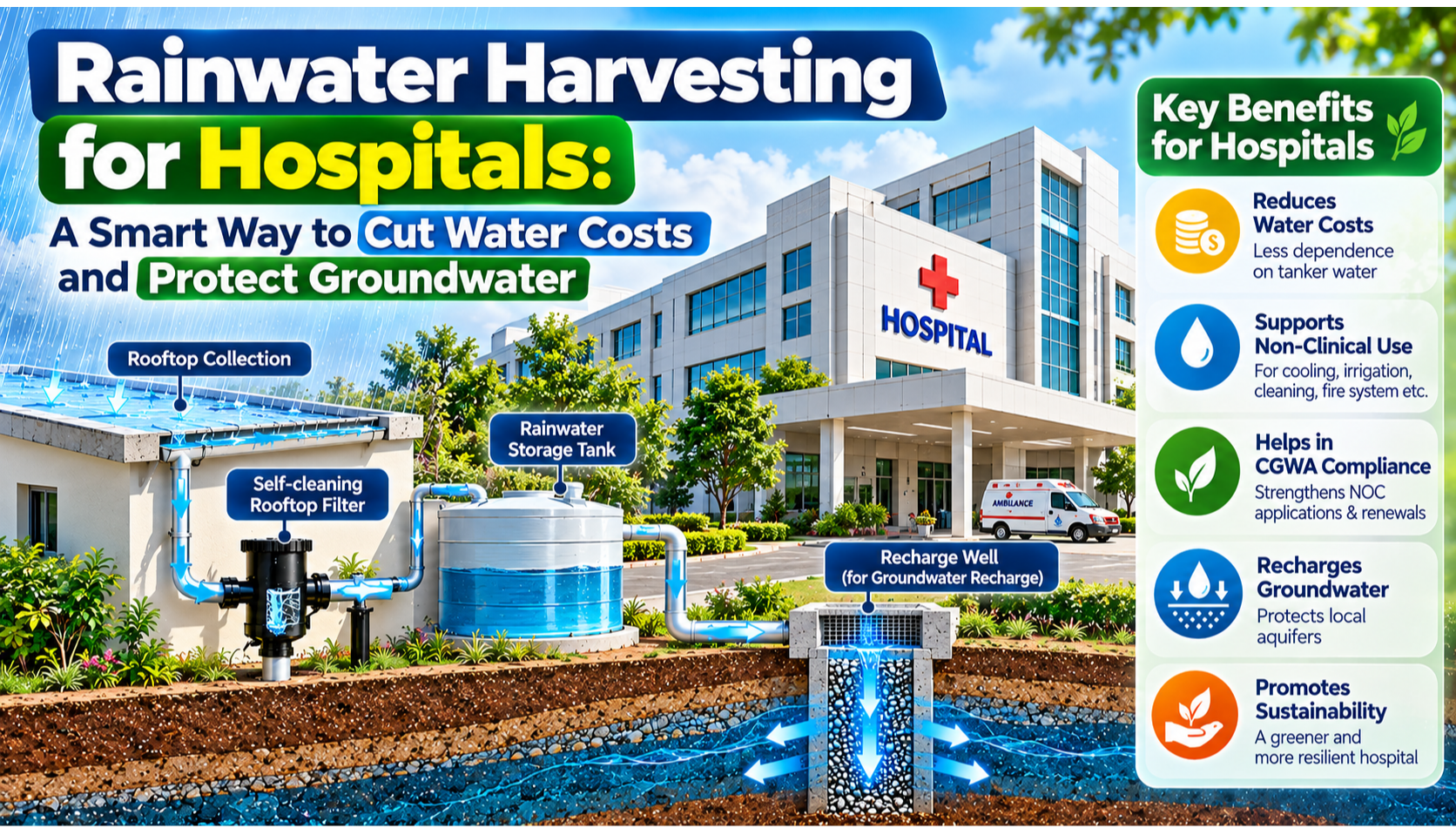
refreshingly simple. Rain falling on the roof flows into the downpipes, passes
through a rooftop rainwater filter that removes leaves, dust, and debris, and
the clean water is then either stored in an underground sump or sent down to
recharge the borewell. For a campus with several buildings, the roof is usually
divided into zones, each with its own filter, so no single unit gets
overwhelmed during a heavy downpour.
Choosing a Self-Cleaning Rainwater Filter for Healthcare Campuses
Hospital engineering teams are
busy, and a filter that needs constant manual cleaning will not get it. A
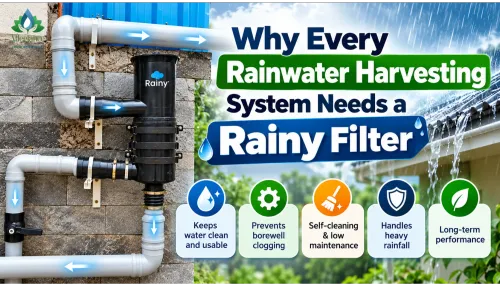
self-cleaning filter like the Rainy filter flushes debris out automatically
every time it rains. It runs on gravity, so no electricity or pump is involved,
and it delivers filtration efficiency above 90 percent. Models cover roof areas
from around 120 square metres up to 500 square metres per unit, with discharge
from 120 LPM to over 480 LPM, which makes it easy to match the filters to each
building.
Groundwater Recharge for Hospitals: V-Wire Injection Wells
Hospitals with larger campuses
can go beyond rooftop collection and add a V-wire injection well or recharge
pond. Run-off passes through a silt trap, then through layers of gravel, sand,
and activated carbon before percolating into the aquifer. It takes up little
land, needs very little upkeep, and the space above can often still be used for
something else, which matters on a crowded hospital site.
Rainwater Harvesting and CGWA Compliance for Hospitals
Hospitals and other bulk
commercial users that run their own borewells can fall under CGWA's groundwater
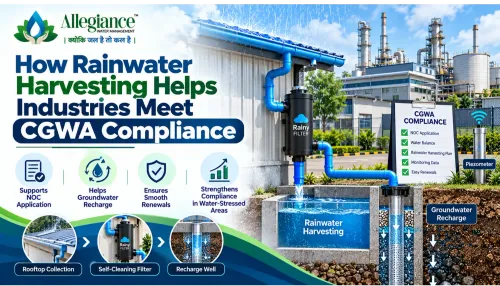
regulations. A documented rainwater harvesting system, backed by a
geohydrological survey and basic maintenance records, strengthens NOC
applications and renewals. Pair it with a CGWA-compliant flow meter and a
piezometer to track groundwater levels, and you have a clear, auditable water
management record.
Benefits of Rainwater Harvesting for Hospitals
•
Less dependence on tanker water during summer shortages
•
Lower water bills for cooling, landscaping, and
cleaning
•
A stronger case for CGWA clearance and renewal
•
Recharged groundwater around the hospital campus
•
A visible sustainability commitment for patients,
staff, and accreditation bodies
Planning a Hospital Rainwater Harvesting System
It starts with a feasibility
survey: how much roof area you have, how the existing borewell behaves, and
where water can safely be directed. A geohydrological survey then guides the
recharge design. The most important step is involving the infection control and
engineering teams early, so harvested water only goes where it should and stays
completely separate from clinical water systems.
Final Thoughts
Rainwater harvesting will not
replace a hospital's main water supply, and it should not try to. What it does
well is take the pressure off non-clinical water use, give the facility a more
resilient supply through the dry months, and put water back into the ground the
hospital depends on. Done carefully, it is a practical, low-maintenance upgrade
that pays back year after year.
Contact Us
Phone: 9574198769
Email: info.allegianceindia@gmail.com
Website: www.allegianceindia.in