
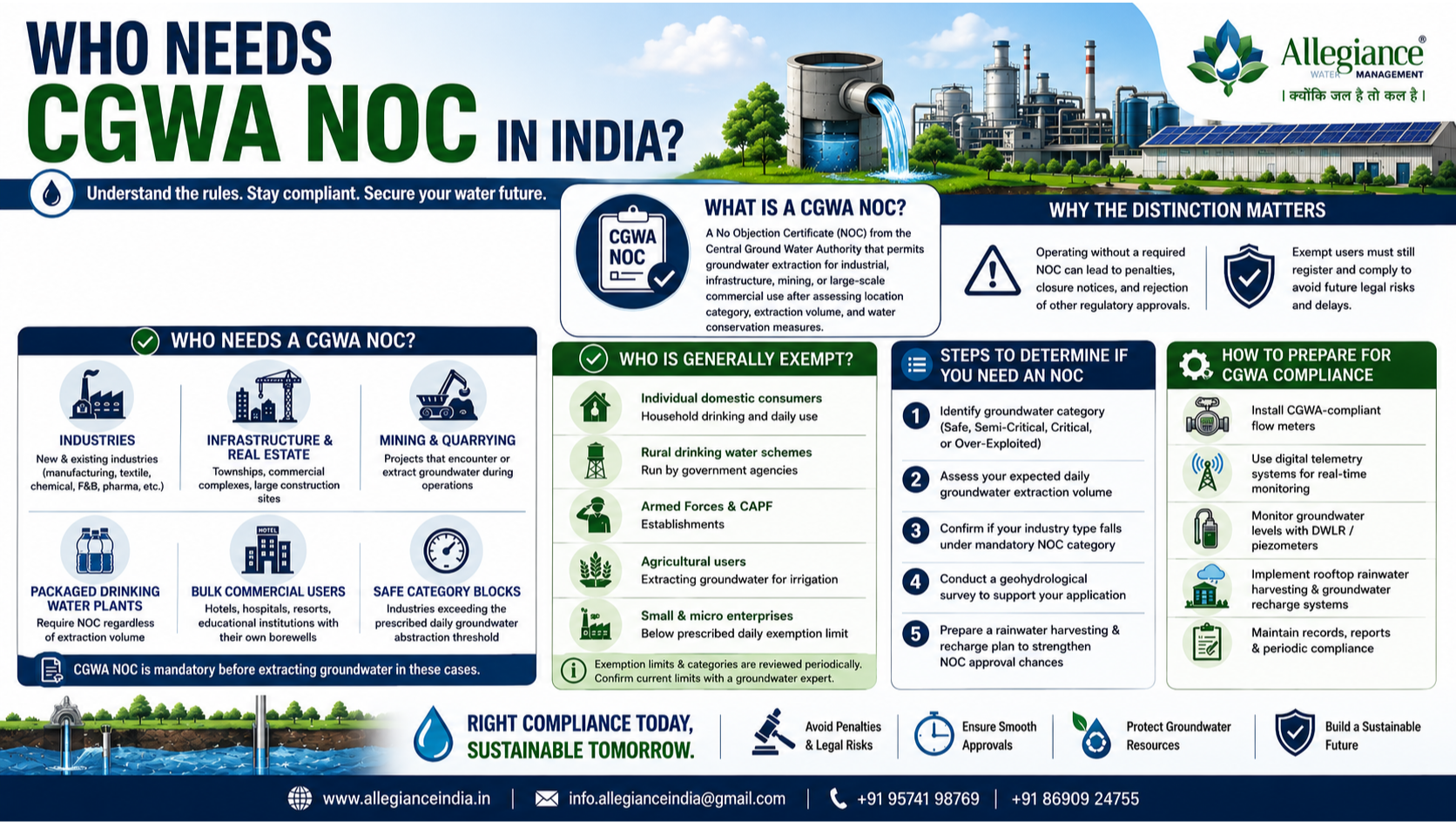
Groundwater extraction in India
is regulated by the Central Ground Water Authority, and one of the most common
questions industries and developers ask is simple: do we actually need a CGWA
NOC? This guide explains who falls under the mandatory NOC requirement, who
is exempt, and what steps to take if your project needs approval.
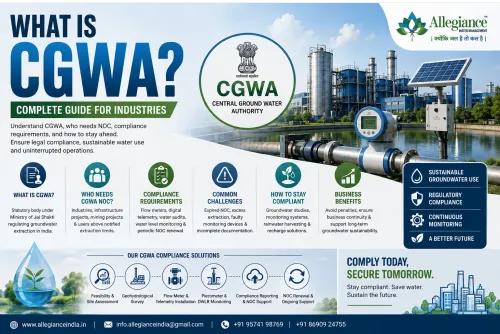
What is a CGWA NOC?
A CGWA NOC, or No Objection
Certificate, is a mandatory clearance issued by the Central Ground Water
Authority that permits an entity to extract groundwater for industrial,
infrastructure, mining, or large-scale commercial use. It is issued after
evaluating the groundwater category of the area, the proposed extraction
volume, and the project's water conservation measures, including rainwater
harvesting.
Who Needs a CGWA NOC
In general, the following
categories are required to obtain a CGWA NOC before extracting groundwater:
•
New and existing industries, including manufacturing,
textile, chemical, food and beverage, and pharmaceutical units
•
Infrastructure and real estate projects such as
townships, commercial complexes, and large construction sites
•
Mining and quarrying projects that encounter or extract
groundwater during operations
•
Packaged drinking water plants, which typically require
an NOC regardless of extraction volume
•
Bulk commercial users such as hotels, hospitals,
resorts, and educational institutions operating their own borewells
•
Industries located in Safe category blocks whose
groundwater abstraction exceeds the prescribed daily threshold
Who is Generally Exempt
Certain categories are typically
exempted from the full CGWA NOC process, though registration or basic
compliance may still apply:
•
Individual domestic consumers drawing water for
household drinking and daily use
•
Rural drinking water supply schemes run by government
agencies
•
Armed Forces and Central Armed Police Force
establishments
•
Agricultural users extracting groundwater for
irrigation
•
Small and micro enterprises extracting below the
prescribed daily exemption limit
Exemption thresholds and categories are reviewed periodically,
so it is advisable to confirm current limits with a groundwater consultation
expert before assuming an exemption applies.
Why the Distinction Matters
Operating without a required
NOC can lead to penalties, closure notices, and rejection of other regulatory
approvals linked to groundwater use. On the other hand, industries that qualify
for exemption but fail to register can also face compliance issues later.
Understanding exactly where your project stands helps avoid delays and legal
risk from the outset.
Steps to Determine If You Need an NOC
•
Identify the groundwater category (Safe, Semi-Critical,
Critical, or Over-Exploited) of your project location
•
Assess your expected daily groundwater extraction
volume
•
Confirm whether your industry type falls under a
mandatory NOC category
•
Conduct a geohydrological survey to support your
application
•
Prepare a rainwater harvesting and recharge plan, which
strengthens NOC approval chances
How to Prepare for CGWA Compliance
Whether or not your project
ultimately needs a full NOC, installing groundwater monitoring infrastructure
such as CGWA-compliant flow meters and digital water level recorders
demonstrates good-faith compliance and supports faster approvals. Pairing this with
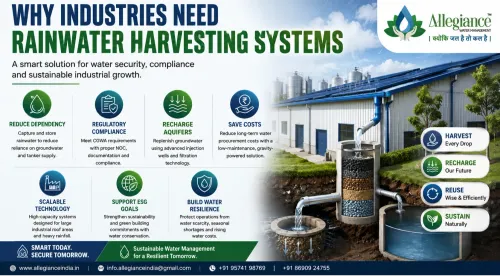
a rooftop rainwater harvesting system and groundwater recharge measures further
strengthens your application and long-term sustainability record.
Conclusion
Determining whether your
project needs a CGWA NOC depends on your industry type, location category, and
extraction volume. Industries, infrastructure developers, and bulk commercial
users should treat this as a non-negotiable first step, while smaller users
should confirm their exemption status rather than assume it. Getting this right
from the start protects your project from costly compliance issues down the
line.