
Industrial operations depend
heavily on a steady water supply for processing, cooling, and utility
functions. As groundwater levels decline and regulations tighten, rainwater
harvesting systems have become a practical necessity rather than an
optional upgrade. This guide explains the key reasons industries are adopting
rainwater harvesting and how it supports long-term operational resilience.
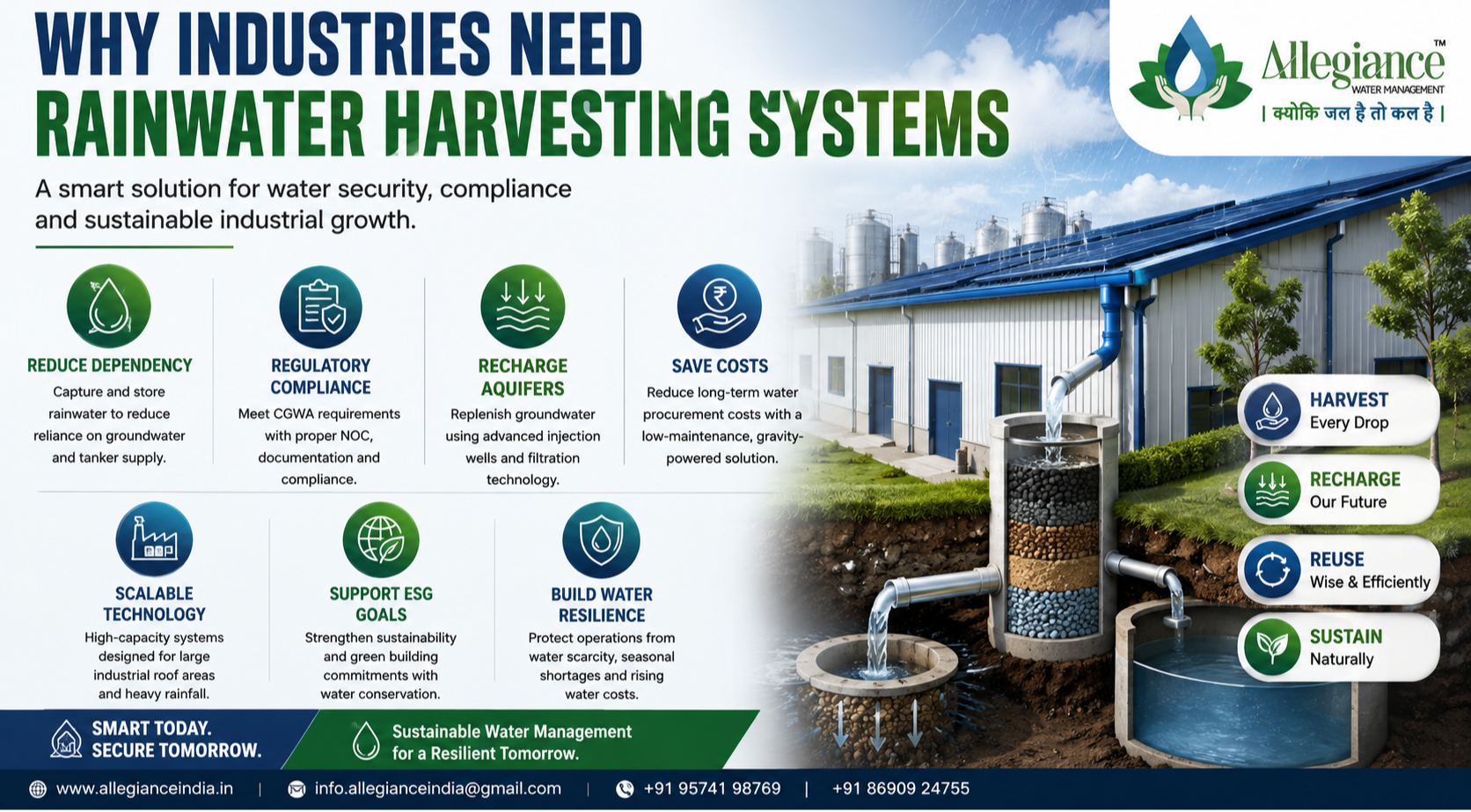
Reason 1: Reducing Dependency on Groundwater and Tankers
Large industrial roofs can
capture significant volumes of rainwater during the monsoon season. By
collecting and storing this water in underground sumps for reuse, industries
can reduce their reliance on borewells and expensive tanker water during peak production
periods, easing pressure on an already strained groundwater supply.
Reason 2: Regulatory Compliance and CGWA Requirements
Industries extracting
groundwater are increasingly required to demonstrate compliance with the
Central Ground Water Authority. Installing a rainwater harvesting system,
supported by CGWA clearance, NOC documentation, and geohydrological surveys,
helps facilities meet regulatory obligations while avoiding penalties linked to
unmonitored or excessive groundwater extraction.
Reason 3: Recharging Depleted Aquifers
Beyond storage and reuse,
rainwater harvesting supports groundwater development through recharge wells
and recharge ponds. Using V-wire injection well technology, run-off water is
filtered through gravel, sand, and activated carbon before percolating into the
aquifer. This scientific approach helps rejuvenate depleted or defunct
borewells and restores water tables in industrial zones where extraction often
outpaces natural recharge.
Reason 4: Cost Savings on Water Procurement
Water procurement costs,
whether through municipal supply, tankers, or deep borewell pumping, add up
significantly over time for water-intensive industries. A well-designed
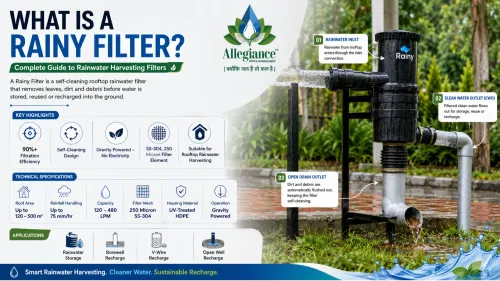
rainwater harvesting system, using self-cleaning filters with filtration
efficiency above 90 percent, provides a low-maintenance, gravity-powered source
of usable water that reduces long-term operational expenses.
Reason 5: Scalable Technology for Large Roof Areas
Industrial facilities often
have roof areas well beyond what standard residential systems can handle.
Rainwater filters designed for industrial use are rated for roof coverage up to
500 square metres per unit, handling rainfall intensity of up to 75 mm per hour
with discharge capacities up to 480 LPM, making the technology scalable across
large manufacturing plants and warehouses.
Reason 6: Supporting ESG and Green Building Goals
Sustainability reporting and
green building certifications, including IGBC alignment, increasingly factor in
water conservation efforts. A functioning rainwater harvesting system
strengthens an industry's ESG credentials and demonstrates measurable commitment
to responsible water stewardship, which can influence stakeholder and investor
confidence.
Reason 7: Protecting Against Water Scarcity Risk
Water scarcity poses a direct
operational risk for industries dependent on continuous water supply.
Facilities that invest in rainwater harvesting, groundwater recharge, and water
level monitoring build resilience against seasonal shortages, regulatory restrictions,
and rising water costs, positioning themselves for stable long-term operations.
Building a Complete System
An effective industrial
rainwater harvesting setup typically begins with a feasibility survey, followed
by filter selection based on roof area, and a decision between direct reuse,
borewell recharge, or a dedicated recharge well. Ongoing maintenance of the
system ensures consistent performance across multiple monsoon seasons.
Conclusion
Rainwater harvesting has moved
from a nice-to-have initiative to an operational and regulatory priority for
industries. From cost savings and compliance to aquifer recharge and
sustainability reporting, the benefits make a strong case for every water-intensive
facility to invest in a properly designed rainwater harvesting system.