

In India, rainwater harvesting has been in practice for more than 4000 years. It is basically a simple process of accumulating and storing of rainwater. Rainwater harvesting systems, since ancient times, has been applied as a supply for drinking water, water for irrigation, and water for livestock.
Basic Structure of Allegiance Rainwater Harvesting
The basic rainwater harvesting system is relatively simple.
- Collecting the rainwater: known as Catchment area, it can be a terrace or ground surface. It should be capable of collecting a large amount of water.
- Primary filter: to filter the collected water and remove large sized debris, mud, etc. from the water. Metal meshes are mainly used for this.
- Gutters: The pipelines or channels that transport the collected water to the storage area is known as gutters. These can be fully cylindrical or half-cut pipes made of iron or PVC plastic.
- Cistern: The storage tanks are known as cisterns. These can be man-made tanks or natural reservoirs like ponds
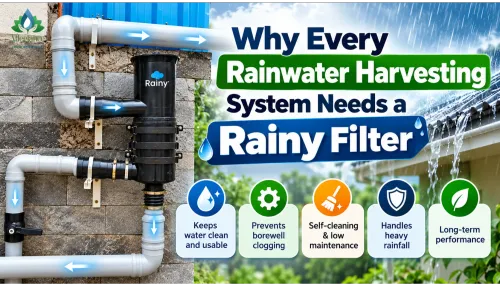
- Filters: Filters are an essential component of this system as the water to be used must be free of suspended solids, dust particles, etc. There are different kinds of filters available under various pore sizes.