
Difference Between STP & ETP
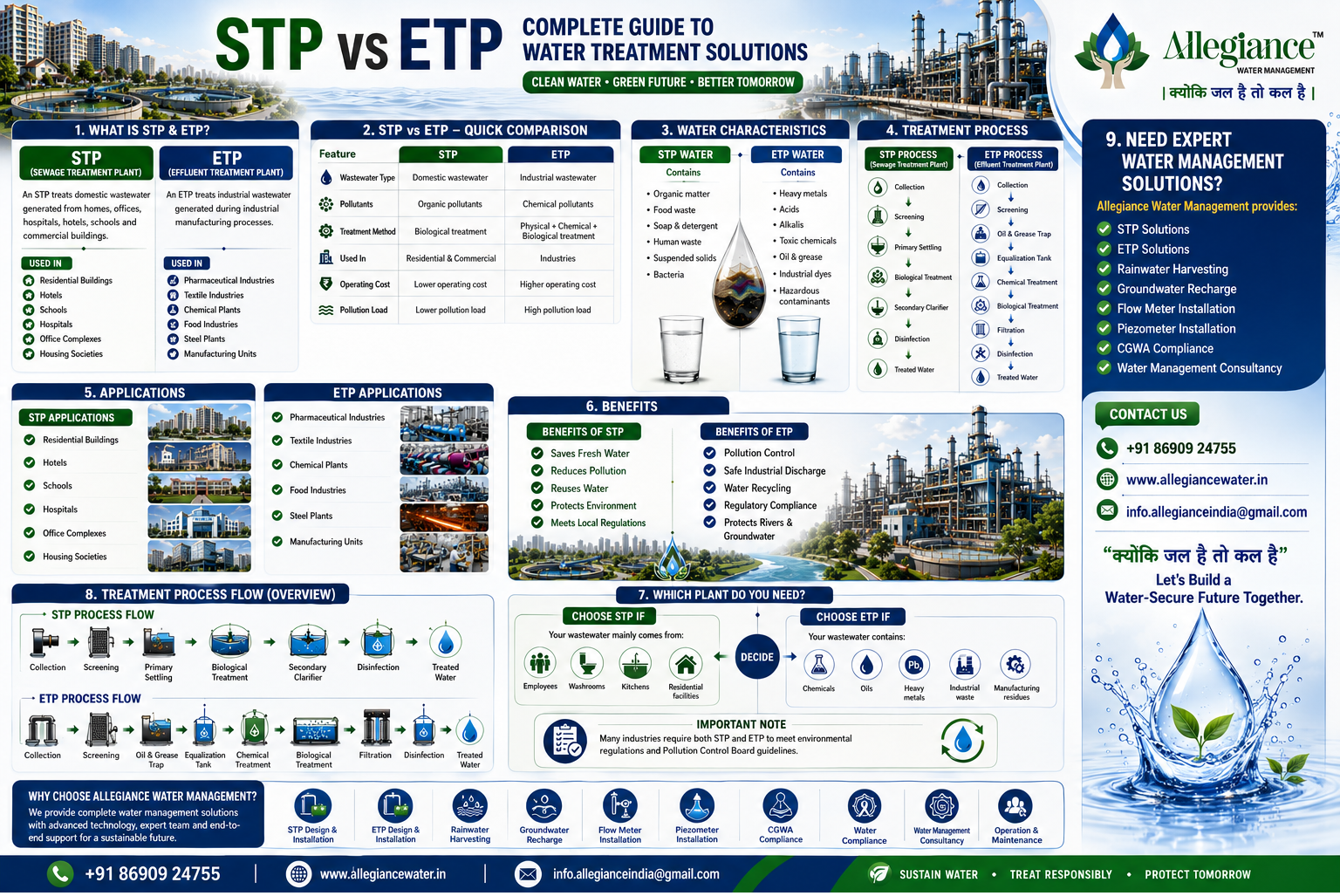
Water is one of our most valuable resources, and treating wastewater correctly is essential for environmental protection and regulatory compliance. Two of the most common wastewater treatment systems are the Sewage Treatment Plant (STP) and the Effluent Treatment Plant (ETP).
Although both are designed to treat wastewater, they serve different purposes depending on the source of the wastewater.
What is STP (Sewage Treatment Plant)?
A Sewage Treatment Plant (STP) is designed to treat domestic wastewater generated from residential, commercial, and institutional buildings.
Common Sources
- Homes & Apartments
- Office Buildings
- Hotels
- Hospitals
- Schools & Colleges
- Residential Townships
STP Removes
- Organic matter
- Suspended solids
- Soap & detergents
- Human waste
- Harmful bacteria
- Pathogens
Treated Water Can Be Reused For
- Gardening
- Toilet Flushing
- Landscaping
- Cooling Towers
- Construction Activities
What is ETP (Effluent Treatment Plant)?
An Effluent Treatment Plant (ETP) is specifically designed to treat industrial wastewater generated during manufacturing and production processes.
Industries Using ETP
- Pharmaceutical
- Chemical
- Textile
- Food Processing
- Paint
- Paper
- Electroplating
- Manufacturing Plants
ETP Removes
- Heavy Metals
- Oils & Grease
- Toxic Chemicals
- Acids & Alkalis
- Industrial Dyes
- Hazardous Contaminants
Purpose
To ensure industrial wastewater meets Pollution Control Board standards before discharge or reuse.
STP vs ETP – Quick Comparison
| STP | ETP |
|---|---|
| Treats Domestic Wastewater | Treats Industrial Wastewater |
| Removes Organic Pollutants | Removes Chemical Pollutants |
| Mainly Biological Treatment | Physical + Chemical + Biological Treatment |
| Residential & Commercial Use | Industrial Use |
| Lower Operating Cost | Higher Operating Cost |
| Lower Pollution Load | Higher Pollution Load |
Treatment Process
STP Process
Collection → Screening → Primary Settling → Biological Treatment → Secondary Clarifier → Disinfection → Treated Water
ETP Process
Collection → Screening → Oil & Grease Trap → Equalization Tank → Chemical Treatment → Biological Treatment → Filtration → Disinfection → Treated Water
Applications
STP Applications
- Residential Buildings
- Hotels
- Schools
- Hospitals
- Office Complexes
- Housing Societies
ETP Applications
- Pharmaceutical Industries
- Textile Industries
- Chemical Plants
- Food Industries
- Steel Plants
- Manufacturing Units
Benefits of STP
- Saves Fresh Water
- Reduces Pollution
- Enables Water Reuse
- Protects the Environment
- Meets Government Regulations
Benefits of ETP
- Controls Industrial Pollution
- Ensures Safe Wastewater Discharge
- Supports Water Recycling
- Helps Meet Regulatory Compliance
- Protects Rivers & Groundwater
Which Plant Do You Need?
Choose STP If
Your wastewater mainly comes from:
- Washrooms
- Kitchens
- Employee Facilities
- Residential Buildings
Choose ETP If
Your wastewater contains:
- Chemicals
- Oils
- Heavy Metals
- Industrial Waste
- Manufacturing Residues
Important: Many industries require both STP and ETP to comply with environmental regulations and Pollution Control Board guidelines.
Why Choose Allegiance Water Management?
We provide complete water management solutions under one roof.
Our Services
- STP Design & Installation
- ETP Design & Installation
- Rainwater Harvesting Systems
- Groundwater Recharge Solutions
- Flow Meter Installation
- Piezometer Installation
- CGWA Compliance Support
- Water Management Consultancy
- Operation & Maintenance Services
Our experienced team delivers reliable, sustainable, and regulation-compliant solutions for residential, commercial, and industrial clients across India.
Contact Us
Allegiance Water Management
Because Water Today Means Tomorrow.
Phone: +91 86909 24755
Website: www.allegiancewater.in
Email: info.allegianceindia@gmail.com