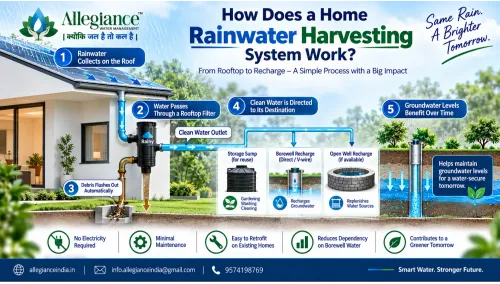

A rainwater harvesting system
that works well in its first monsoon and keeps performing year after year
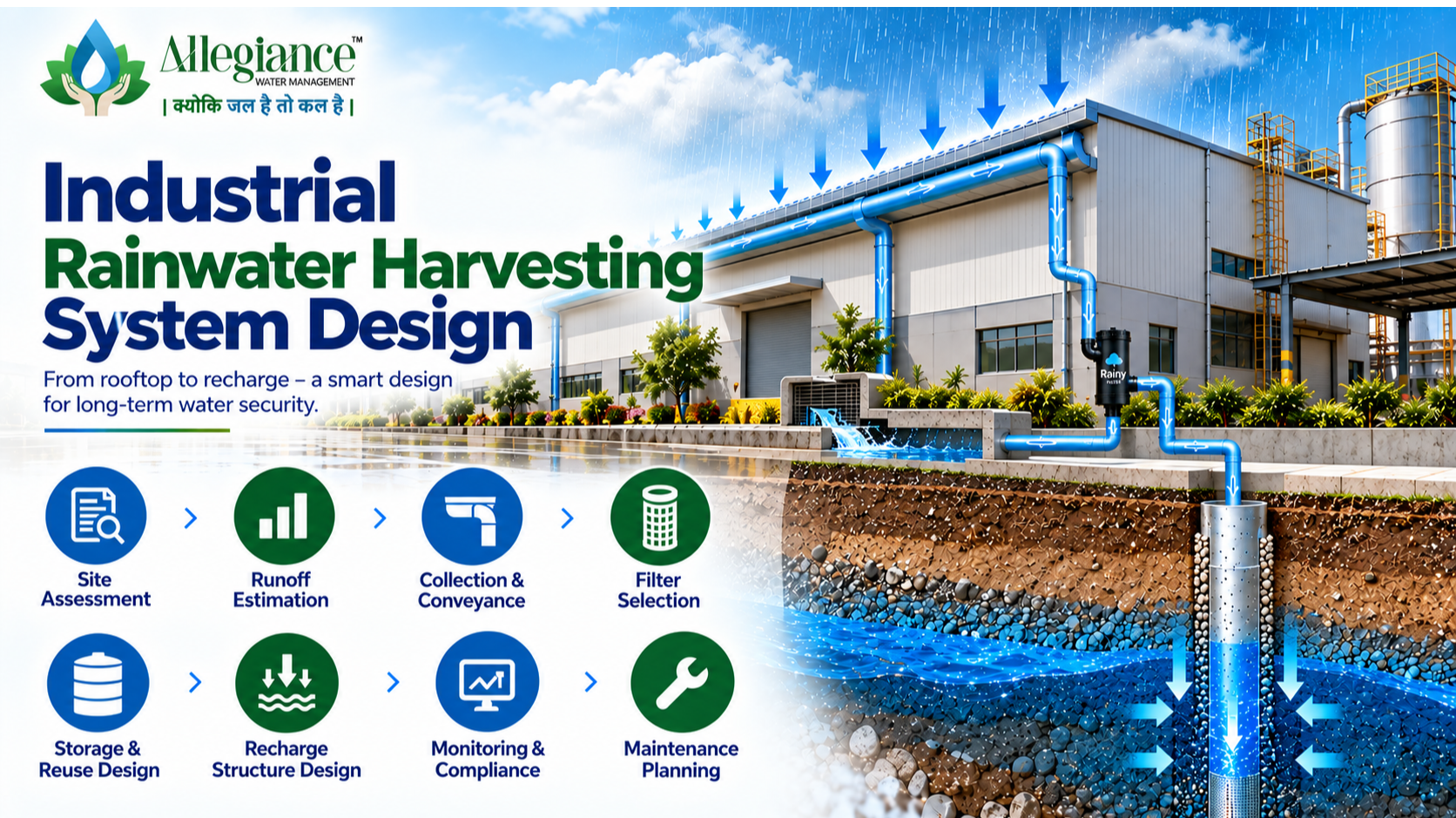
starts with solid design. For factories and large facilities, Industrial Rainwater Harvesting System design means carefully matching the catchment, filtration,
storage, and recharge to the actual roof area, local rainfall, and ground
conditions on site. This guide walks through the key design stages industries
should expect.
Stage 1: Feasibility and Site
Assessment
Everything begins with a proper rainwater harvesting feasibility survey. This
looks at the total roof and paved catchment area, existing borewells and open
wells, the site’s topography, drainage paths, and how much space is available
for storage or recharge structures. A geohydrological survey then checks the
soil type and aquifer conditions. That tells you how much water the ground can
realistically absorb and which recharge method will work best.
Stage 2: Catchment and Runoff
Estimation
Next, we estimate how much water can actually be harvested. This calculation
uses the catchment area, local rainfall data, and a runoff coefficient based on
the surface type. Roofs generally give a higher yield than paved or unpaved
ground. The estimate sets the target capacity for filters, storage, and
recharge structures—and it must account for peak rainfall intensity, not just
annual averages.
Stage 3: Collection and
Conveyance
Rainwater from industrial roofs and yards is guided through gutters, downpipes,
and channels toward filtration and recharge points. Runoff from open areas is
directed through channels into a silt trap, where heavier sediment settles out
before the water moves on by pipeline. Proper pipe sizing and gradient are
essential so nothing overflows during intense rain.
Stage 4: Filter Selection and
Sizing
Filters are chosen according to the roof area each unit will handle and the
design rainfall intensity. Rainy filters, for example, come in models covering
roof areas from about 120 square metres up to 500 square metres per unit.
They’re rated for rainfall intensity of up to 75 mm per hour, with discharge
capacity ranging from 120 LPM to 480 LPM. Large industrial roofs are usually
divided into zones, each with its own filter, so no single unit gets
overloaded.
Stage 5: Storage and Reuse
Design
When the filtered water will be reused, underground sumps or tanks are sized to
hold a useful share of the expected runoff. This is balanced against the
plant’s actual demand for non-process uses like cooling make-up, washdown, and
landscaping. Going too big adds unnecessary cost; going too small means you
lose harvestable water during heavy rain.
Stage 6: Recharge Structure
Design
For groundwater recharge, most industries use a V-wire injection well paired
with a recharge pond or storage well. Filtered water passes through layers of
gravel, coarse sand, crushed stone, and activated carbon, then through V-wire
screens and percolator casing pipes into the weathered zone and aquifer.
Existing defunct borewells can also be rejuvenated as recharge points. Common
design choices include:
• Direct borewell recharge for smaller roof areas
• V-wire injection wells for larger roof areas and higher volumes
• Recharge ponds for large open campuses with suitable soil
• Multiple smaller structures spread across the site instead of one large point
Stage 7: Monitoring and
Compliance Integration
Good design plans for measurement from the beginning. Digital water level
recorders in nearby wells show how the aquifer responds to recharge, while
CGWA-compliant flow meters track extraction. Building these into the layout
makes it much easier to prepare the documentation needed for CGWA NOC
applications and renewals, including the rainwater harvesting plan and water
balance.
Stage 8: Maintenance Planning
Design should make maintenance straightforward. Silt traps need accessible
covers, filters need clear access before the monsoon, and recharge wells need
inspection points. Agreeing on a simple maintenance schedule at the design
stage helps the system stay reliable across many monsoon seasons.
Common Design Mistakes to
Avoid
• Sizing for average rainfall instead of peak intensity
• Skipping the geohydrological survey and assuming the soil will absorb water
• Sending all runoff to a single filter or recharge point
• Leaving out a silt trap, which shortens the life of recharge structures
• Ignoring access for cleaning and inspection
Conclusion
Strong industrial rainwater harvesting design follows a clear path: assess the
site, estimate runoff, size the filters and storage, choose the right recharge
structure, and plan monitoring and maintenance from day one. Getting these
stages right is what turns a rooftop into a reliable, compliant water asset.