
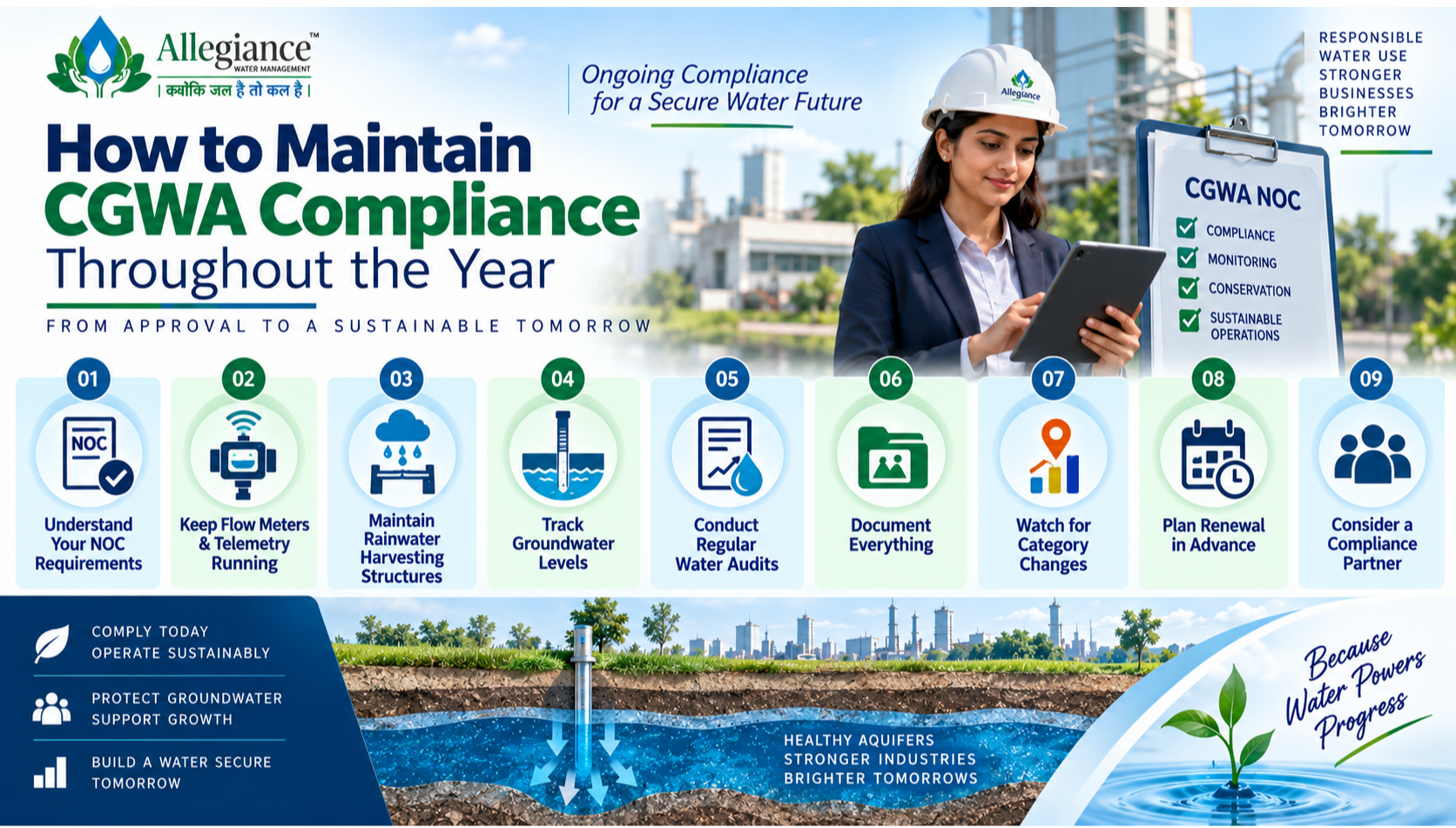
Getting a CGWA NOC approved is
only half the job. CGWA compliance is an ongoing responsibility that
runs for the entire validity of the approval, not a one-time checkbox.
Industries that treat compliance as a continuous process avoid last-minute
scrambles at renewal time and reduce the risk of penalties in between. This
guide outlines what year-round CGWA compliance actually looks like.
Understand What Your NOC Actually Requires
Every CGWA NOC comes with a
specific set of conditions covering permitted extraction volume, required
monitoring infrastructure, and rainwater harvesting or recharge obligations.
The first step to year-round compliance is having a clear internal record of
these conditions, since compliance is measured against what your specific NOC
states, not general assumptions.
Keep Flow Meters and Telemetry Running
Most NOCs require a digital
flow meter installed at the extraction point, with data transmitted through an
IoT-based telemetry device. Maintaining compliance means checking the meter's
readings regularly, ensuring telemetry data uploads without interruption, and
promptly repairing or replacing the unit if it malfunctions. A flow meter that
stops reporting for extended periods is a common trigger for compliance queries
during inspection or renewal.
Maintain Rainwater Harvesting Structures
Rainwater harvesting and
recharge structures approved as part of the NOC need periodic upkeep to remain
functional. This includes:
•
Cleaning rooftop rainwater filters before and during
the monsoon season
•
Inspecting recharge wells and V-wire injection systems
for clogging or silt buildup
•
Clearing silt traps regularly to maintain filtration
performance
•
Checking that underground storage sumps are
structurally sound and free of leaks
Neglected recharge structures are one of the most visible
compliance gaps during site inspections, since they are easy to verify
physically.
Track Groundwater Levels Continuously
Where a piezometer or digital
water level recorder is part of the NOC conditions, ensure it continues logging
data throughout the year. This ongoing record not only supports compliance
reporting but also gives your facility early warning if groundwater levels
start declining faster than expected, allowing corrective action before it
becomes a bigger problem.
Conduct Regular Water Audits
High-volume users are typically
required to submit periodic water audit reports documenting total water usage,
source-wise breakdown, and reuse or recycling measures. Conducting these audits
on a scheduled basis, rather than rushing to prepare one only when renewal
approaches, keeps your data accurate and readily available.
Document Everything as You Go
Maintain an ongoing file of
photographs, maintenance logs, and meter reading records for your rainwater
harvesting and monitoring systems throughout the year. This makes preparing the
self-compliance report required at renewal far quicker, since the supporting
evidence is already organized rather than needing to be recreated
retroactively.
Watch for Category Changes in Your Area
Groundwater assessment
categories, Safe, Semi-Critical, Critical, or Over-Exploited, are reassessed
periodically and can change. If your area shifts to a more restrictive category
during your NOC's validity, additional compliance measures such as an updated
impact assessment or a strengthened water management plan may be required
before the next renewal.
Plan the Renewal Timeline in Advance
Renewal applications must be
submitted at least 90 days before the NOC's expiry date, and this deadline
should be marked well in advance internally, not left to be discovered close to
the date. Building renewal preparation into your annual compliance calendar
avoids the risk of the NOC lapsing due to a late filing.
Consider a Compliance Partner
For facilities managing
multiple compliance obligations alongside daily operations, working with a
groundwater consultation provider for ongoing maintenance of rainwater
harvesting systems, flow meter servicing, and water audits removes much of the
administrative burden and reduces the risk of gaps going unnoticed until it is
too late.
Conclusion
CGWA compliance does not end
when the NOC is granted, it continues through functional monitoring equipment,
maintained recharge structures, regular audits, and organized documentation
throughout the year. Building these habits into routine operations, rather than
treating them as a renewal-time task, is the most reliable way to stay
compliant and avoid disruption.