
How Does a Home Rainwater
Harvesting System Work?
Many homeowners consider
rainwater harvesting but aren't quite sure what actually happens between the
rooftop and the borewell. A home rainwater harvesting system is simpler
than it sounds, relying mostly on gravity and a compact filter to turn rooftop
rainfall into a usable water resource. This guide walks through exactly how the
system works, step by step.
The Basic Idea Behind Home Rainwater Harvesting
A home rainwater harvesting
system captures rain falling on the rooftop, filters out dirt and debris, and
then directs the clean water either into storage for reuse or into the ground
to recharge the borewell. The exact setup depends on the size of the roof and
the condition of the home's existing borewell.
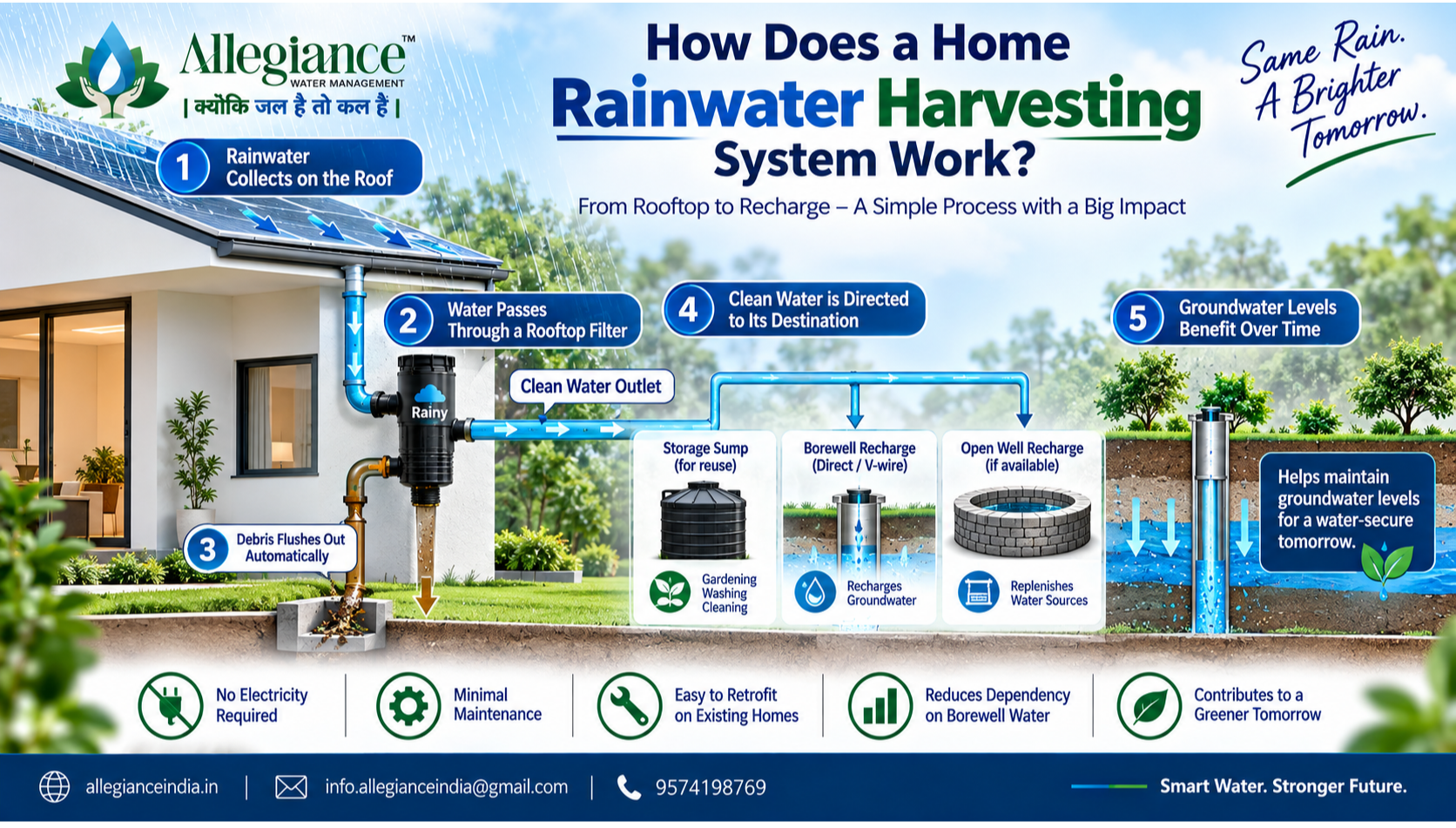
Step 1: Rainwater Collects on the Roof
The process starts the moment
rain falls on the rooftop. Gravity naturally guides the water toward the
existing gutters and downpipes that already carry rainwater off the house, so
no major structural changes are needed to begin harvesting.
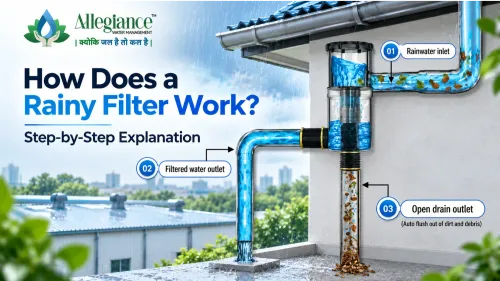
Step 2: Water Passes Through a Rooftop Filter
Before the water goes anywhere
useful, it passes through a compact rainwater filter connected inline with the
downpipe. Using cohesive force and centrifugal force, the filter separates
leaves, dust, and debris from the clean water, achieving filtration efficiency
above 90 percent, all without any electricity or moving parts.
Step 3: Debris Flushes Out Automatically
As filtration happens,
separated dirt and debris exit through the filter's open drain outlet
automatically. This self-cleaning action means homeowners rarely need to
manually clean the filter, even during the heaviest part of the monsoon.
Step 4: Clean Water is Directed to Its Destination
Once filtered, the clean water
exits through the Clean Water Outlet and is directed toward one of a few
possible destinations, depending on the home's setup:
•
An underground storage sump, where the water is reused
for gardening, washing, or cleaning
•
Directly into the borewell casing pipe, recharging
groundwater if the roof area is less than 100 square metres
•
Through V-wire technology into the borewell, for homes
with roof areas larger than 100 square metres
•
Into an open well, if the home has one instead of a
borewell
Step 5: Groundwater Levels Benefit Over Time
When rainwater is directed to
recharge a borewell, it gradually replenishes the aquifer beneath the property
instead of running off into drains and being lost. Over multiple monsoon
seasons, this can noticeably support water availability in the borewell,
particularly in areas where groundwater levels have been declining.
Choosing the Right Setup for Your Home
The right configuration depends
on roof area, how quickly your existing borewell absorbs water, and whether the
well tends to overflow during heavy rain. Homes with smaller roofs and a
well-percolating borewell often do fine with direct casing pipe recharge, while
larger homes or those with slower-absorbing soil benefit more from a dedicated
recharging well using V-wire technology.
Why This System Works So Well for Homes
•
No electricity required, since the entire process runs
on gravity
•
Minimal maintenance thanks to the self-cleaning filter
•
Easy to retrofit onto existing rooftops and downpipes
•
Reduces dependency on borewell water during dry months
•
Contributes to groundwater recharge in the surrounding
neighborhood
Conclusion
A home rainwater harvesting
system works through a simple sequence: rain collects on the roof, passes
through a self-cleaning filter, and is directed to storage or groundwater
recharge. With minimal maintenance and no electricity required, it is one of the
easiest sustainability upgrades any homeowner can make.
Contact Us
Phone: 9574198769
Email: info.allegianceindia@gmail.com
Website: www.allegianceindia.in