
As borewells run drier each
summer and municipal supply becomes less predictable, a home rainwater harvesting system has moved from a nice-to-have to a genuinely practical
investment. This guide explains why homeowners across urban and semi-urban
areas are choosing to install one, and what makes the decision worth it.
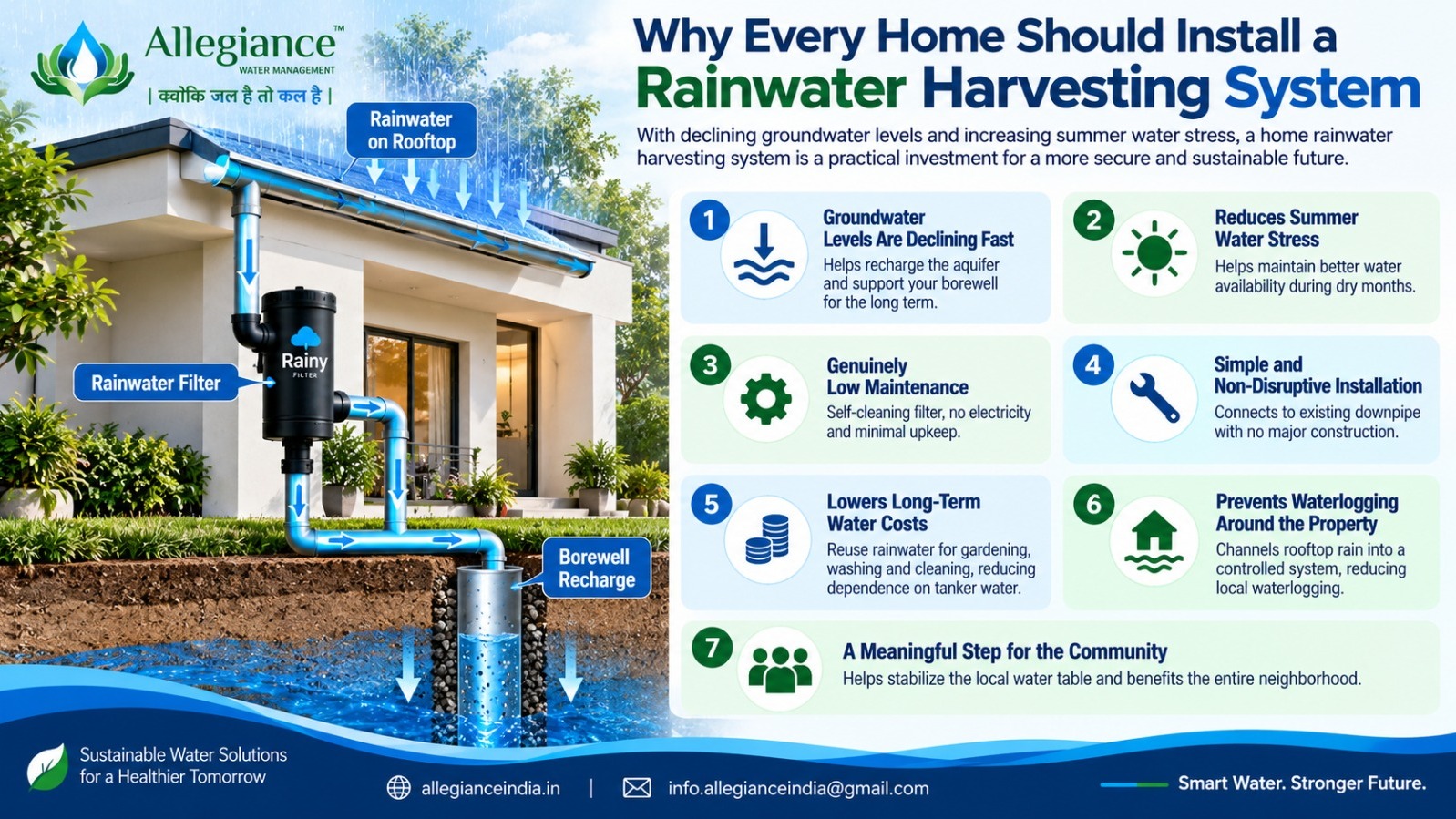
Reason 1: Groundwater Levels Are Declining Fast
Many residential neighborhoods
are seeing borewells dig deeper each year just to reach the same water table
that used to be accessible a few metres down. A home rainwater harvesting
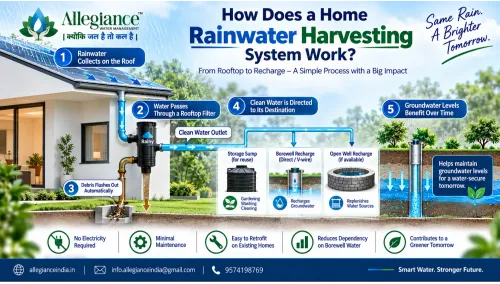
system directs rainfall back into the ground instead of letting it run off into
drains, helping recharge the very aquifer your borewell depends on.
Reason 2: It Reduces Summer Water Stress
Homes that recharge their
borewells during the monsoon often notice better water availability in the
following dry months. Rather than relying entirely on tanker water or reduced
municipal supply during peak summer, a well-maintained recharge system helps
keep the borewell productive for longer.
Reason 3: It's Genuinely Low Maintenance
A home rainwater harvesting
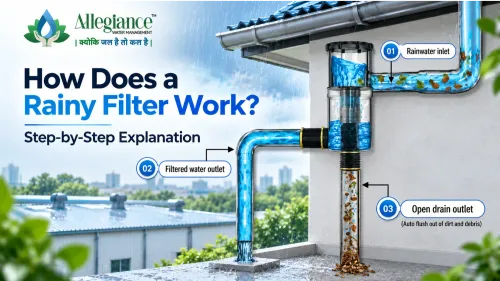
system built around a self-cleaning dual intensity filter requires very little
upkeep. Debris automatically flushes out through the open drain outlet during
rainfall, and the entire process runs on gravity, so there is no pump, no
electricity bill, and almost nothing to maintain beyond an occasional check.
Reason 4: Installation Is Simple and Non-Disruptive
The filter connects directly to
an existing rooftop downpipe, meaning most homes can install a system without
major construction or plumbing changes. Whether the roof area is under 100
square metres or larger, there is a filter model sized to match, with recharge
routed either directly into the borewell casing or through V-wire technology.
Reason 5: It Lowers Long-Term Water Costs
Reusing filtered rainwater for
gardening, washing, or cleaning reduces reliance on borewell or tanker water
for everyday tasks. Over several monsoon seasons, this adds up to meaningful
savings, especially in areas where tanker water costs rise sharply during
summer shortages.
Reason 6: It Prevents Waterlogging Around the Property
Directing rooftop rainfall into
a controlled filter and recharge system, rather than letting it collect
unchecked around the foundation or driveway, helps reduce localized
waterlogging during heavy downpours, protecting the property from water damage
over time.
Reason 7: It's a Meaningful Step for the Community
Groundwater doesn't recognize
property boundaries. When homes across a neighborhood recharge their borewells,
the collective effect helps stabilize the local water table for everyone, not
just the household with the system installed. It's one of the few individual
actions that genuinely benefits the wider community.
What a Home System Typically Includes
•
A self-cleaning rooftop rainwater filter with over 90
percent filtration efficiency
•
SS-304 multi-surface, food-grade filter element with
UV-treated polyethylene housing
•
Direct borewell recharge or V-wire technology depending
on roof size
•
Optional underground sump for storing filtered water
for reuse
Getting Started
The right setup depends on your
roof area and how your existing borewell responds to recharge, so a brief
assessment of your property helps determine the best filter model and recharge
method before installation begins.
Conclusion
From easing summer water stress
to protecting the neighborhood's groundwater table, a home rainwater harvesting
system delivers benefits that go well beyond the household itself. With low
maintenance, simple installation, and a real long-term payoff, it is one of the
most practical upgrades any homeowner can make.
Contact Us
Phone: 9574198769
Email: info.allegianceindia@gmail.com