
Groundwater is one of the most valuable natural resources, yet it remains largely invisible until a borewell runs dry or an aquifer collapses under overuse. This is where a piezometer becomes essential. If you are researching groundwater level monitoring for a construction project, an industrial facility, or CGWA compliance, this guide breaks down what a piezometer is, how it works, and why it matters.
What is a Piezometer?
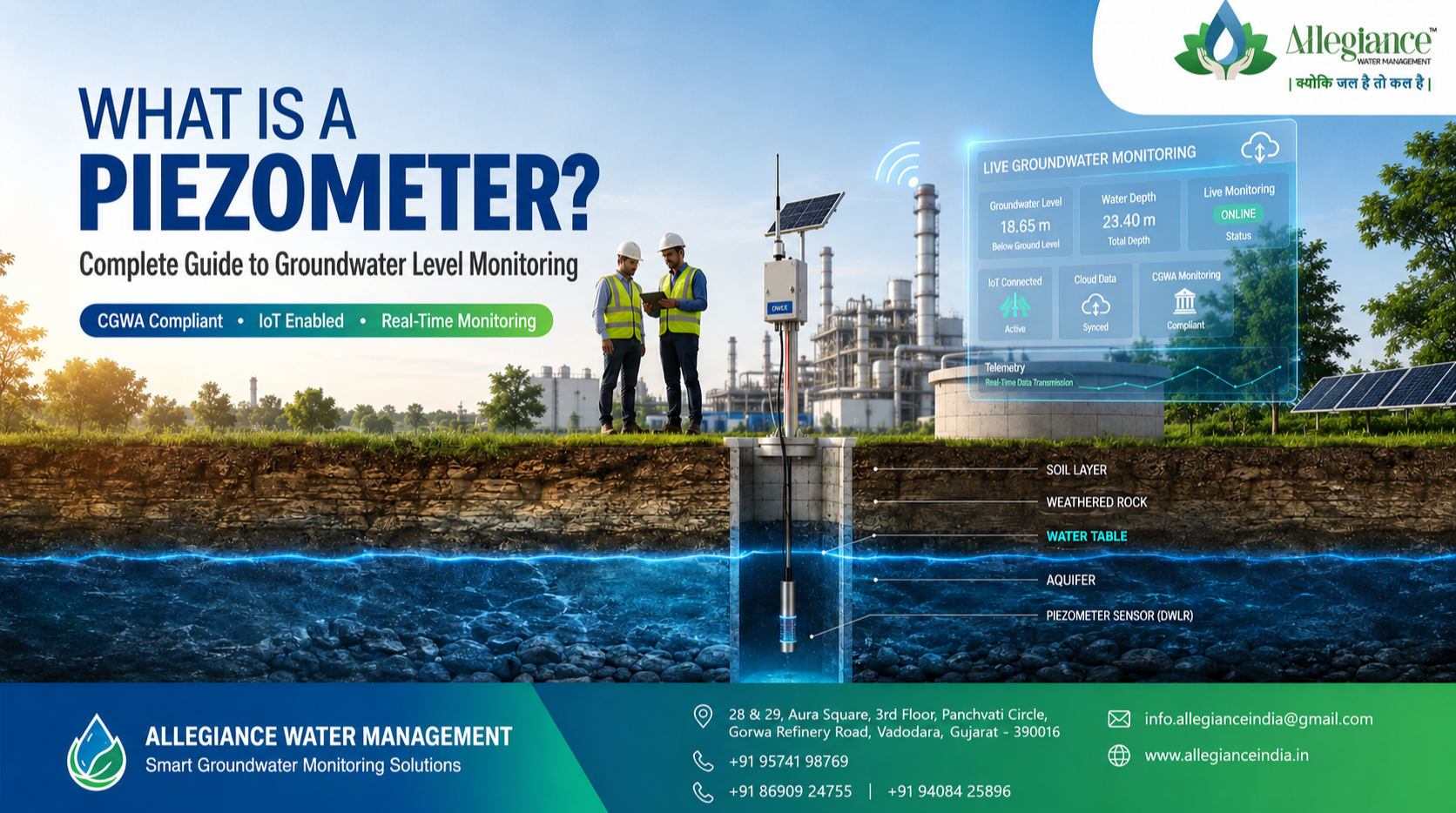
A piezometer, also known as a Digital Water Level Recorder (DWLR), is an instrument used to measure and record the water level in a borewell, observation well, or river. Unlike a simple manual gauge, a modern piezometer uses a water-proof stainless steel sensor to continuously track fluctuations in groundwater level, giving engineers, hydrogeologists, and facility managers accurate, real-time data.
Piezometers are a critical part of any groundwater level monitoring system, particularly for industries and developers required to demonstrate compliance with the Central Ground Water Authority (CGWA).
How Does a Piezometer Work?
A piezometer functions using a pressure transducer that detects changes in water pressure as the water level rises or falls. This data is converted into a digital reading and can be:
- Displayed directly on the device screen
- Stored internally (with capacity up to 32 GB)
- Uploaded to cloud-based storage for remote access
- Transmitted via GSM to a PC or mobile device using a telemetry add-on
This makes the piezometer both a measurement tool and a long-term water level recording system, capable of tracking seasonal trends and depletion patterns over months or years.
Key Features of a Digital Water Level Recorder
A quality piezometer, such as the units used in professional groundwater consultation, typically includes:
- Water-proof stainless steel sensor for durability
- Compact, easy-to-install, and easy-to-transport design
- No ongoing maintenance requirements
- Pressure transducer unaffected by wind or rain
- 4-20mA current output for integration with monitoring systems
- High accuracy and corrosion resistance
- Shielded wiring for long-term reliability
Technical specifications generally include a measurement range of up to 400 metres, accuracy of ±0.5% FS, and a 12V DC power supply, making these instruments suitable for both shallow observation wells and deep borewells.
Why Groundwater Level Monitoring Matters
With increasing water scarcity across India, groundwater level monitoring is no longer optional for large developments, industries, or agricultural operations. Consistent monitoring helps organizations:
- Track aquifer depletion and recovery trends
- Support CGWA clearance and compliance requirements
- Plan artificial recharge projects such as recharge wells and injection wells
- Make informed decisions on borewell usage and water audits
- Contribute to long-term water conservation planning
Manual vs Digital Water Level Indicators
While manual water level indicators (using a probe and measuring tape) remain useful for quick spot checks, digital piezometers are the preferred choice for continuous, automated groundwater monitoring. They eliminate human error, reduce site visits, and provide a documented data trail that is often required for regulatory reporting and geohydrological surveys.
Applications of Piezometers
Piezometers are widely used across:
- Industrial and manufacturing facilities requiring CGWA compliance
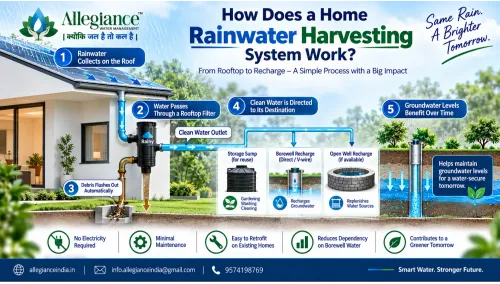
- Residential and commercial rainwater harvesting systems
- Rivers and open water bodies for hydrological studies
- Agricultural borewells for sustainable water extraction planning
- Environmental consultation and geohydrological surveys
Choosing the Right Piezometer for Your Site
When selecting a Digital Water Level Recorder, consider the required measurement depth, whether cloud-based or local data storage is needed, and if GSM telemetry is necessary for remote monitoring. Working with an experienced groundwater consultation provider ensures the right instrument is matched to your site's hydrogeological conditions.
Conclusion
A piezometer is far more than a measuring device — it is a critical tool for sustainable water management, regulatory compliance, and long-term aquifer protection. As groundwater regulations tighten and water scarcity concerns grow, investing in reliable groundwater level monitoring technology is a practical step for any organization managing borewells or water resources.