
Manufacturing plants consume
water continuously for processing, cooling, cleaning, and utility operations,
making them among the largest groundwater users in any industrial region. Rainwater harvesting for manufacturing industries offers a practical way to reduce
this dependency while meeting regulatory requirements. This guide explains how
manufacturing units can implement rainwater harvesting effectively.
Why Manufacturing Plants Need Rainwater Harvesting
Manufacturing facilities
typically operate on large plots with extensive rooftop and shed areas, roof
surfaces that are often left unused during heavy monsoon rainfall. Capturing
this water instead of letting it run off into drains reduces reliance on borewells
and municipal supply, while also supporting compliance with CGWA regulations
that increasingly require water conservation measures as a condition for
groundwater extraction approval.
How the System Works on a Factory Floor
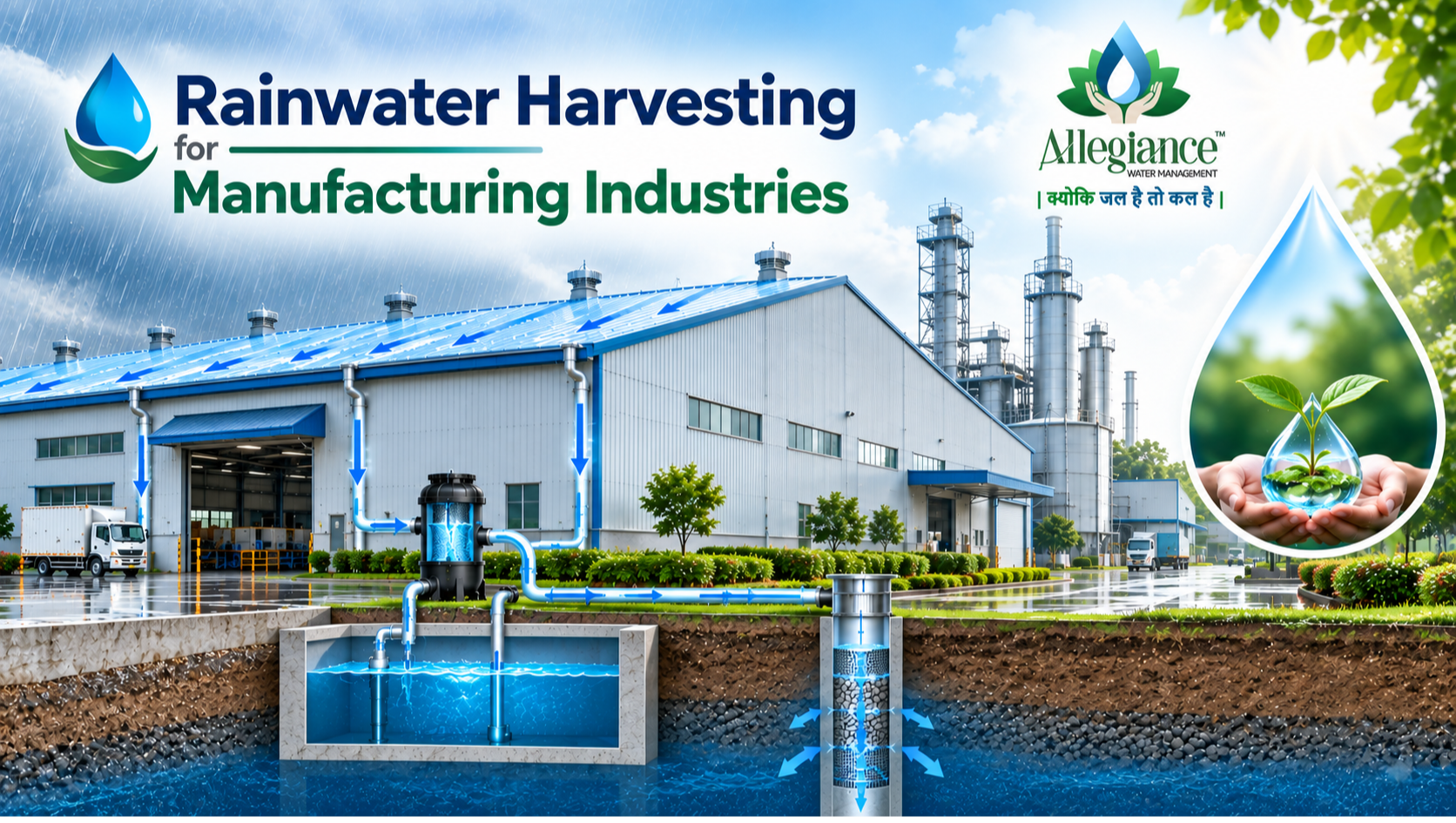
Rainwater collected from
manufacturing shed rooftops is directed through downpipes into a rainwater
filter that removes dirt and debris before the water is used or recharged.
Depending on the plant layout, manufacturing units typically apply one or more of
these methods:
•
Storing filtered rainwater in underground sumps for
reuse in cooling towers, floor washing, or landscaping
•
Recharging the borewell by connecting filtered water
directly to the casing pipe
•
Recharging the borewell through V-wire technology for
roof areas exceeding 100 square metres
•
Diverting water to a dedicated recharge well or
recharge pond for larger manufacturing campuses
Filtration Built for Continuous Plant Operation
Manufacturing environments
generate more dust and debris on rooftops than typical commercial buildings,
making filter reliability especially important. Key technology features suited
to this environment include:
•
Self-cleaning dual intensity filters that flush debris
automatically
•
Filtration efficiency above 90 percent
•
SS-304 multi-surface, food-grade filter elements
•
UV-treated high-density polyethylene housing built for
outdoor industrial exposure
•
Gravity-powered operation requiring no electricity
•
Open-ended, non-clog design suited to heavy roof debris
load
Filter units are available for roof areas ranging from around
120 square metres up to 500 square metres per unit, with discharge capacities
from 120 LPM to over 480 LPM, allowing multiple units to be installed across
large manufacturing sheds as needed.
Groundwater Recharge for Manufacturing Campuses
Larger manufacturing campuses
often integrate rooftop harvesting with a scientific groundwater recharge
system using a V-wire injection well and recharge pond. Run-off water passes
through a silt trap before percolating through layers of gravel, coarse sand,
crushed stone, and activated carbon into the aquifer. This approach also allows
rejuvenation of defunct borewells that may already exist on older manufacturing
sites, turning unused infrastructure into a functional recharge asset.
Supporting CGWA and Regulatory Compliance
Manufacturing units extracting
groundwater are frequently required to demonstrate active conservation measures
as part of their CGWA NOC and renewal process. A documented rainwater
harvesting system, supported by geohydrological survey data and maintenance
records, strengthens the case for approval and helps avoid penalties linked to
unmonitored extraction.
Cost and Sustainability Benefits
•
Reduces dependency on tanker water during peak
production and dry seasons
•
Lowers long-term water procurement and borewell
operating costs
•
Supports ESG reporting and green manufacturing
certifications
•
Helps recharge aquifers strained by continuous
industrial extraction
•
Reduces flooding and waterlogging risk around large
paved manufacturing sites
Planning Implementation
A well-planned rainwater
harvesting system for a manufacturing unit begins with a feasibility survey
covering total roof area, existing borewell conditions, and site topography.
Based on this assessment, filter units and recharge structures can be sized correctly,
ensuring the system performs reliably across every monsoon season without
overwhelming storage or recharge capacity.
Conclusion
Rainwater harvesting gives
manufacturing industries a practical way to cut water costs, meet regulatory
obligations, and contribute to groundwater sustainability in industrial zones.
With the right filtration and recharge design matched to plant size, any
manufacturing facility can turn its rooftop into a dependable, low-maintenance
water resource.