
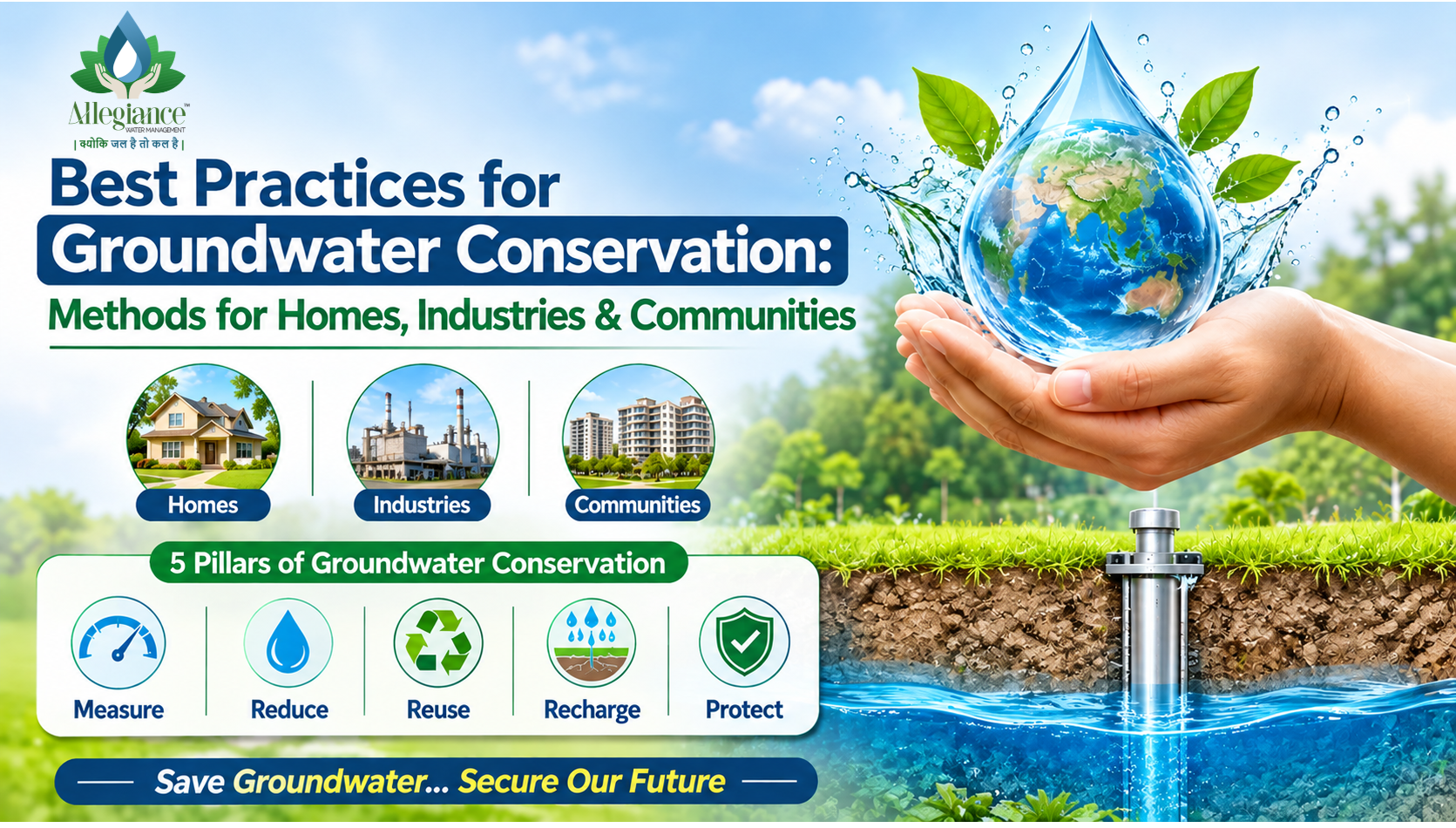
Best Practices for Groundwater Conservation
By Allegiance Water Management, Vadodara
Groundwater is
the water nobody sees but almost everybody depends on. It fills our borewells,
keeps farms alive through the dry months, runs factories and supplies drinking
water to millions of homes. Because it is hidden, it is also easy to take for
granted, until the borewell has to be drilled deeper, or stops giving water
altogether.
The good news
is that groundwater can recover when it is used wisely and given a chance to
refill. Here are the best practices for groundwater conservation that work for
homes, housing societies, industries and whole communities.
Why Groundwater Conservation Matters
India uses more
groundwater than any other country in the world, and in many blocks, water is
pumped out faster than the rain can put it back. The signs of groundwater
depletion in India are familiar: borewells going deeper every few years, wells
drying up in summer, rising tanker dependence, and in some areas, worsening
water quality as levels fall.
Groundwater
conservation is not about using no water. It is about balance: taking out less,
putting more back, and keeping what is underground clean.
Five Pillars of Groundwater Conservation
Every good
groundwater conservation method fits into one of five simple ideas:
|
Pillar |
What It Means |
Examples |
|
Measure |
Know how much you use and how levels change |
Flow meters, piezometers, water audits |
|
Reduce |
Pump
only what you really need |
Fixing
leaks, efficient fixtures, drip irrigation |
|
Reuse |
Use treated wastewater instead of fresh groundwater |
STP and ETP reuse, greywater for gardening |
|
Recharge |
Help
rainwater soak back into the ground |
Rooftop
rainwater harvesting, recharge wells, ponds |
|
Protect |
Keep groundwater clean |
Proper effluent treatment, safe waste handling |
How to Conserve Groundwater: 10 Best
Practices
1. Measure Before You Manage
You can't save
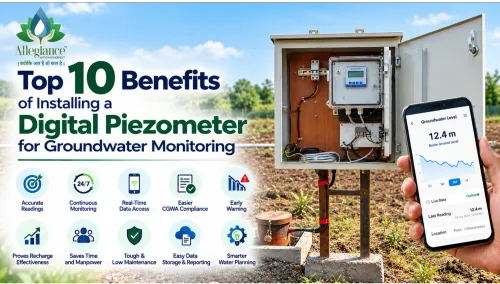
what you don't measure. A flow meter on your borewell shows exactly how much
you pump. A piezometer with a digital water level recorder shows whether the
water table under you is rising or falling. Together, they turn guesswork into
decisions.
2. Stop Leaks and Overflows
Dripping taps,
leaking pipes and overflowing tanks waste water that came straight out of the
ground. A float valve, a quick plumbing check and a habit of switching off the
pump on time can save a surprising amount.
3. Pump Smarter, Not Harder
Avoid running
borewell pumps longer than needed. Use timers or level controllers, choose a
correctly sized pump, and spread pumping through the day rather than running it
non-stop. This reduces stress on the aquifer and on your pump motor.
4. Switch to Efficient Irrigation
Watering
gardens and farms is one of the biggest uses of groundwater. Drip and sprinkler
irrigation deliver water to the roots with far less waste than flood irrigation
or hosepipes. Watering in the early morning or evening also cuts evaporation
losses.
5. Reuse Treated Wastewater
A sewage
treatment plant (STP) or effluent treatment plant (ETP) can provide water for
gardening, flushing, washing and cooling towers. Every litre reused is a litre
that doesn't have to be pumped from the ground.
6. Harvest Rainwater from Every Roof
Rooftop
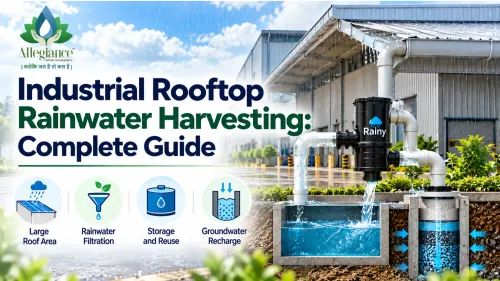
rainwater harvesting is the simplest way to give back. Rain from your roof is
filtered through a self-cleaning Rainy filter and either stored for use or sent
underground. One roof may seem small, but a street, a society or an industrial
estate doing the same makes a real difference.
7. Use Artificial Groundwater Recharge
Methods
Where the
ground allows, recharge structures help rainwater reach the aquifer much faster
than it would naturally:
•
Recharge pits and trenches for small plots and
gardens.
•
Recharge wells and V-wire injection wells for
larger roofs and campuses, using very little land.
•
Defunct borewell recharge, which turns a dry
borewell into a recharge point.
•
Recharge ponds where open land is available.
Always filter
the water first and keep recharge points away from septic tanks and pollution
sources.
8. Protect Groundwater Quality
Conservation is
also about keeping groundwater clean. Treat industrial effluent properly, never
send sewage or chemicals into borewells or recharge pits, store fuels and
chemicals on sealed surfaces, and keep soak pits a safe distance from wells.
Polluted groundwater is very hard and very costly to clean up.
9. Let the Land Soak Up Rain
Concrete and
paving send rainwater straight into drains. Leaving open green spaces, using
permeable paving where possible and planting trees all help rain soak in.
Miyawaki-style mini forests and native plants improve soil and slow down
runoff.
10. Think at the Watershed Level
Groundwater
doesn't stop at property boundaries. Watershed management for groundwater, such
as contour trenches, check dams, gully plugs and revived ponds, slows rainwater
across a whole area so more of it seeps into the ground. Communities, villages
and large campuses that work together see the biggest gains.
Groundwater Conservation at Home
•
Install rooftop rainwater harvesting with a proper
filter.
•
Recharge your borewell, or an old dry one, with
filtered roof water.
•
Fix leaks and use a float valve on your overhead tank.
•
Use drip irrigation for your garden and water it early
in the morning.
•
Reuse RO reject water for mopping or washing.
Groundwater Conservation for Industries
•
Fit flow meters on every borewell and track water use
per unit of production.
•
Run a water audit to find leaks and waste.
•
Reuse STP and ETP water for utilities and gardening.
•
Install rooftop rainwater harvesting across sheds and
warehouses.
•
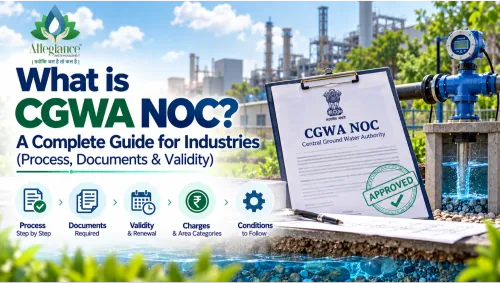
Monitor groundwater levels with piezometers and meet
CGWA NOC conditions.
•
Where your NOC allows, recharge rooftop water. Where it
doesn't, store and reuse it.
Groundwater Conservation in Gujarat with
Allegiance
Allegiance
Water Management has been working in water management and conservation since
2012, with more than 1,000 projects for homes, housing societies, institutions
and industries, including L&T, NTPC, Polycab and Torrent Power. We are an
Indian Green Building Council (IGBC) member. Our services cover every pillar of
groundwater conservation:
•
Measure: water audits, CGWA compliant flow
meters and digital piezometers.
•
Reuse: STP, ETP, industrial RO plants and water
softeners.
•
Recharge: rooftop rainwater harvesting, Rainy
filters, recharge wells, defunct borewell recharge and aquifer rejuvenation.
•
Restore: watershed management, landscaping,
Miyawaki forestation and drip irrigation.
•
Comply: CGWA NOC support and geohydrological
surveys.
We serve
Vadodara, Ahmedabad, Bharuch, Halol, Surat, Valsad and Vapi, along with Daman,
Diu, Dadra and Nagar Haveli and Indore.
Start Conserving Groundwater Today
Whether it is one home, a housing society or a large industrial campus,
small steps add up. Get in touch with our team, and we'll help you find the
right groundwater conservation methods for your site.
Allegiance
Water Management
A unit of Allegiance Enterprises
Phone: +91 9574198769
Email: info.allegianceindia@gmail.com
Website: www.allegianceindia.in
Address: 28 & 29, Aura Square, 3rd Floor, Panchvati
Circle, Gorwa Refinery Road, Panchvati, Vadodara, Gujarat 390016