Thank you for writing to us. One of our executive will reach back to you through your submitted medium. In case there’s an urgency, feel free to connect over WhatsApp for faster response.
Prefer calling? Dial +918690924755 (International callers) or +918690924755 (Indian callers).
Rainy Rainwater Harvesting Filter. FL 300 (Rooftop Area upto 3600 sq.ft)
The characteristic features of FL Series Dual Intensity Rain Water Harvesting Filter is its capacity to take up the load up to 10 to 350 square meters of roof area with variable intensity of rainfall of 5 to 75 mm/hour with a discharge capacity of 10 to 340 liters per minute.
This filter can be conveniently used for harvesting rainwater for individual households, schools, apartments, institutions, hospitals and commercial buildings of medium and small sizes.
• Item Code: FL-300
Suitable up to area: 350 SQMTRS
Max: Intensity of Rainfall: 75 mm/hr
Working Principle : Cohesive Force & Centrifugal force
Operating Pressure: Less than 2 feet of head (0.060kg/cm2)
Capacity: 340 LPM
Filter Element: SS-304 Screen
Mesh Size: 250 Microns
Inlet: 110 MM
Clean Water Outlet: 90 MM
Drain Outlet: 90 MM
Housing: High Density Polyethylene
Efficiency of Filter: Above 90%
Source of Power: Gravity
“Injection well “
New & Innovative Technology for Rainwater Harvesting System
Products that are precisely coordinated, scientifically designed all-in-one Rainwater Harvesting solutions and dedicated service.
'Allegiance Water Management ' also undertakes turnkey projects in corporate sector/ industries/ government undertaking etc. and is capable of handling large projects right from Rain Water Harvesting design, supply and installation to providing end- to-end solutions. 'Allegiance' is equipped with a dedicated and experienced team of engineers, technician, workmen along with special installation equipment's, drilling rigs, civil structures etc.
Highly trained technical team conducts the Rainwater Harvesting technical survey by studying the layout of the site and building.
Existing piping system of rainwater and storm drains are studied.
Gradient and landscape of the site and building are obtained.
Designing and installation of innovative customized system is done with precise scientific approach. These solutions include: diverting existing rainwater pipes, deployment of underground storage, auto pumping system, piping, filtering, storage, utilization etc.
Designing and construction of ground water recharging structures.
Complete solutions for water neutrality establishment projects.
An observation well means a non-pumping, non-potable well used for measuring groundwater levels or potentiometric surface.
Observation wells can be used to show that a well is obtaining water from an isolated aquifer, or perhaps that the aquifer is connected to other aquifers or surface water.
Piezometers are excellent for capturing water flow, strata permeability, and depth of water pressure.
Digital Water Level Recorder (DWLR) which can be used in piezometer wells as well as tubewells for measurement of water level data. Non-contact devices in Water level measurement are the next generation products in the water sector. Statometer uses an indigenously designed patented signal processing algorithms of acoustic waves for accurate measurements.
Ideal solution for
*Real-time measurement of fluctuations in water table
*Central Ground Water Board(CGWB) NOC compliances
*Determining efficiency of rain water harvesting systems
*Planning crops and drought forecasting in agriculture
Data communications GPRS/GSM
Data visualization - Graphs & list view of data collected
- Analytical tools for trend analysis
- Location of wells on Google maps
User configurable features - Roles and accessibility
- Frequency setup*
- Remote triggering*
Data download options - CSV and xlsx format
- Reports
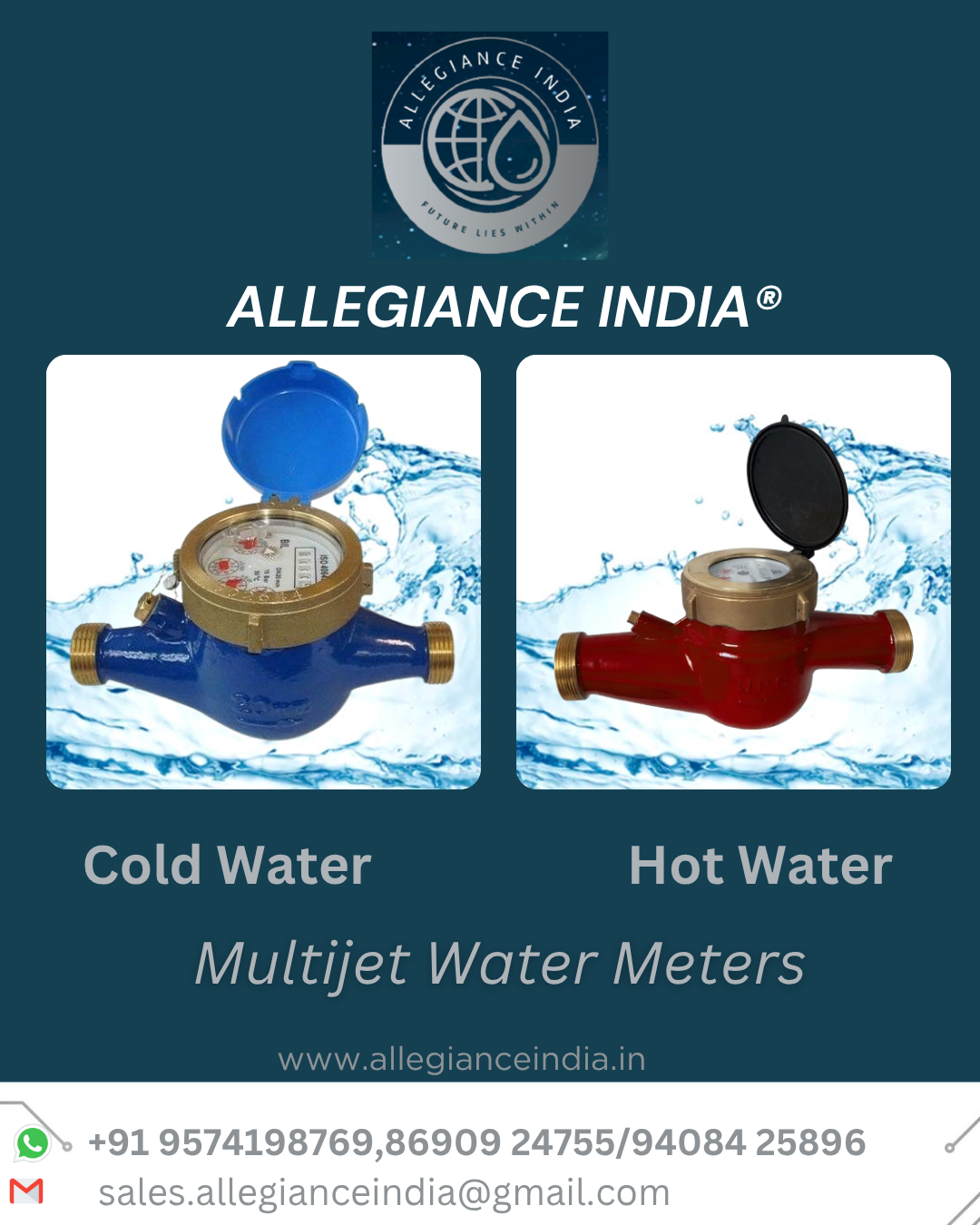
Multi-Jet Screwed End Brass Body Magnetic Type Water Meter
Product Description:
The Multi-Jet Screwed End Brass Body Magnetic Type Water Meter is a high-precision metering device designed for accurate water measurement in residential, commercial, and industrial applications. Built with ISO 4064 standards, it ensures reliable performance, durability, and long service life.
The water meter features a dry dial with a vacuum-sealed register, preventing condensation and ensuring clear readings in all weather conditions. The brass body provides corrosion resistance, making it ideal for both hot and cold water applications.
Key Features:
✅ Accurate Measurement: Multi-jet technology ensures precision in flow measurement.
✅ Durable Brass Body: High-quality brass construction for corrosion resistance & longevity.
✅ Dry Dial & Vacuum-Sealed Register: Prevents moisture buildup, ensuring clear readings.
✅ Magnetic Drive Mechanism: Reduces wear and tear for long-term performance.
✅ ISO 4064 Certified: Meets international water metering standards.
✅ Screwed End Connection: Easy installation and maintenance.
✅ Compact & Efficient Design: Suitable for residential, commercial, and industrial water lines.
Technical Specifications:
Standard: ISO 4064
Material: Brass
Size Options: 0.5 inch - 2 inches
Dial Type: Dry Dial, Vacuum-Sealed
Colour: Blue with Golden Touch
Application: Water Line (Hot/Cold)
Applications:
🏢 Apartments & Residential Complexes
🏭 Manufacturing Units & Industries
🏨 Hotels & Commercial Buildings
🏫 Hospitals, Schools & Public Utilities
For bulk orders or inquiries, contact Allegiance India™ today! 🚀
“Rainy“ Rainwater Harvesting Filters
Completely Indigenous and Patented Technology for Dual Intensity Rainwater Harvesting Filters called 'Rainy'. For groundwater recharging, our innovation uses an injection well equipped with “V-Wire Screens“ that enables replenishment of groundwater source.
Rainwater is one of the purest source of water with less then 50mg/ litre of Total Dissolved Solids (TDS).
Minimalistic, easy-to-install and easy to maintain Products.
Reduction of Carbon Footprint and Recharge water source to avail clean water for consumption.
Working Principle:
When the rainwater along with dirt & debris flows by gravity through the downtake pipes, it enters into the filter and starts rotating in anticlockwise direction at the periphery of the upper housing, this enables it to flow into the SS-304 filter element placed in the lower housing in angular motion at specific speed & velocity, which creates cohesive force at low intensity & centrifugal force at high intensity of rainfall. In both situations, involving low & high intensity of rainfall, the working principle of the filter based on cohesive & centrifugal force respectively, aids the filter element to flush out dirt & debris automatically. The water then passes through the drain outlet and simultaneously diverts clean water into the sump/ recharging well through the clean water outlet, which can be used for reutilization or recharging of groundwater source.
Special Features :
What makes 'Rainy' unique?
Dual Intensity Filters works on the principle of Cohesive & Centrifugal force.
The open drain design does not allow stagnation of water and dirt particles.
Works on Gravitation force (No external energy required).
Cost effective and affordable.
Compact in size and wall mounted.
Inbuilt self-cleaning mechanism.
Automatic flush out of dirt and debris.
No consumables required.
Flexibility in pipe connection to any angle.
Tough UV stabilized high density polyethylene housing.
Filter Element SS-304 Multi-Surface Screen food grade.
All the material used are food grade and recyclable.
Filter Pipe connections can be turned up to 360 Degrees allowing it to suit the given site conditions.
Simple in connection, which any local plumber can easily install.
The filter efficiency remains unchanged even with the variation of intensity of rainfall.
The filters do not have any moving parts; there is no wear & tear of the filter allowing for long life span.
Technology works on the Gravitational Principle so saves power (reduces the pumping of water from distant places & depths).
Swirling movement of water is formed while ‘Rainy’ filters are under operation, this leads to aeration of water. Thus, increases the water quality.
Dual Intensity Filters works on the principle of Cohesive & Centrifugal force.
The open drain design does not allow stagnation of water and dirt particles.
Works on Gravitation force (No external energy required).
Cost effective and affordable.
Compact in size and wall mounted.
Inbuilt self-cleaning mechanism.
Automatic flush out of dirt and debris.
No consumables required.
Flexibility in pipe connection to any angle.
Tough UV stabilized high density polyethylene housing.
Filter Element SS-304 Multi-Surface Screen food grade.
All the material used are food grade and recyclable.
Filter Pipe connections can be turned up to 360 Degrees allowing it to suit the given site conditions.
Simple in connection, which any local plumber can easily install.
The filter efficiency remains unchanged even with the variation of intensity of rainfall.
The filters do not have any moving parts; there is no wear & tear of the filter allowing for long life span.
Technology works on the Gravitational Principle so saves power (reduces the pumping of water from distant places & depths).
Swirling movement of water is formed while ‘Rainy’ filters are under operation, this leads to aeration of water. Thus, increases the water quality.
Percolation Pit is also like Rainwater Harvesting System
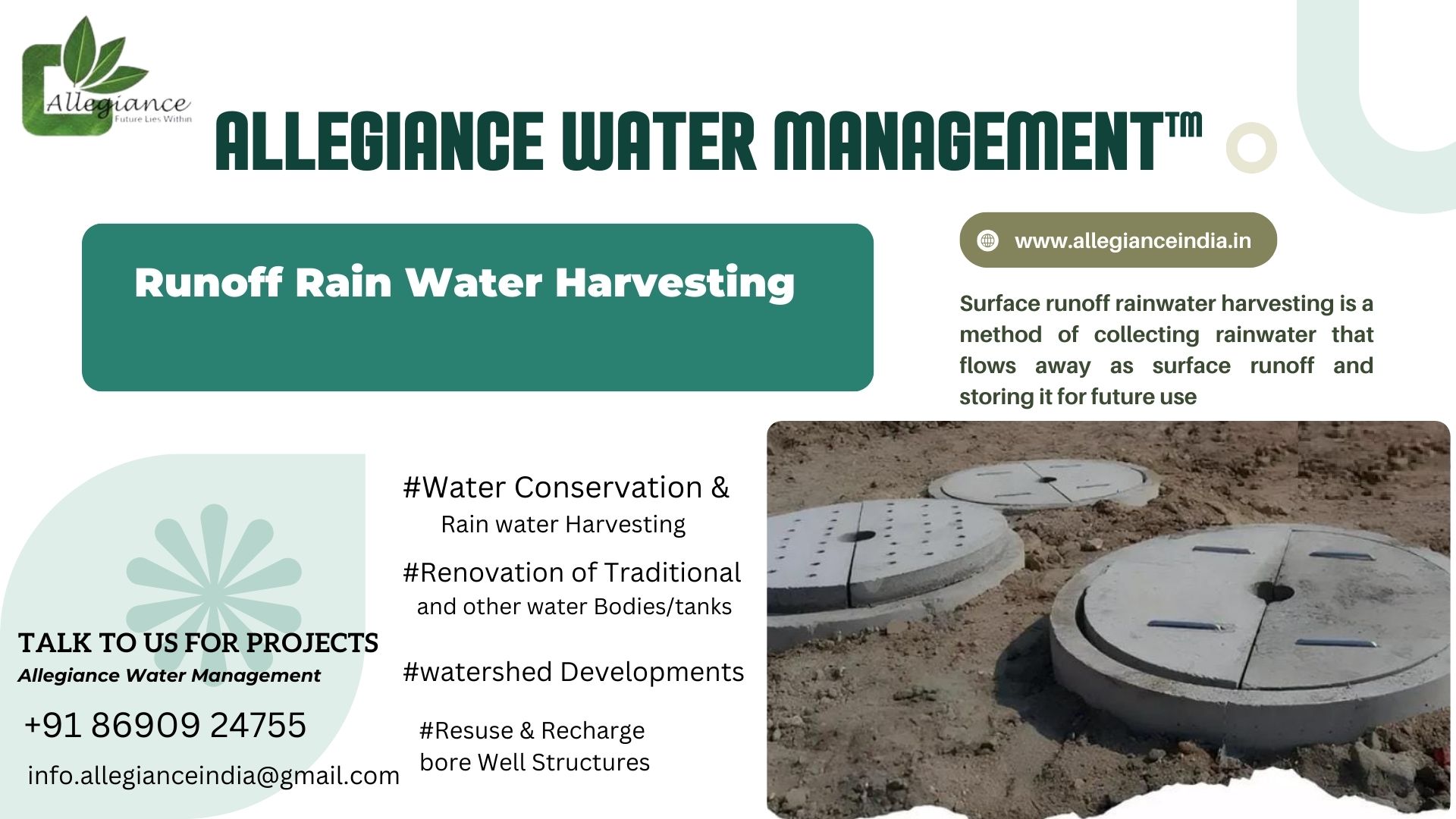
A percolation pit, in its most low-tech form, is a simple hole dug into the ground. It facilitates groundwater recharge through infiltration of surface runoff into the soil or rock. Differences to contour trenches: Better water storage capability due to greater depth.
Percolation tank is an artificially created surface water body, submerging in its reservoir a highly permeable land so that surface runoff is made to percolate and recharge the ground water storage. The percolation tanks are mostly earthen dams with masonry structure only for spillway.
Percolation tank is an artificially created surface water body, submerging in its reservoir a highly permeable land so that surface runoff is made to percolate and recharge the ground water storage.
Percolation tank should be constructed preferable on second to third order streams, located on highly fractured and weathered rocks which have lateral continuity down stream.
The recharged area down stream should have sufficient number of wells and cultivable land to benefit from the augmented ground water.
The size of percolation tank should be governed by percolation capacity of strata in the tank bed. Normally percolation tanks are designed for storage capacity of 0.1 to 0.5 MCM. It is necessary to design the tank to provide a ponded water column generally between 3 & 4.5 m.
The percolation tanks are mostly earthen dams with masonry structure only for spillway. The purpose of the percolation tank is to recharge the ground water storage and hence seepage below the seat of the bed is permissible. for dams upto 4.5 m. height, cut off trenches are not necessary and keying and benching between the dam seat and the natural ground is sufficient.
Water audit is a systematic process of objectively obtaining a water balance by measuring flow
of water from the site of water withdrawal or treatment, through the distribution system, and into
areas where it is used and finally discharged. Conducting a water audit involves calculating
water balance, water use and identifying ways for saving water.
Water audit involves preliminary water survey and detailed water audit. Preliminary water
survey is conducted to collect background information regarding plant activities, water
consumption and water discharge pattern and water billing, rates and water cess. After the
analysis of the secondary data collected from the industry, detailed water audit is conducted,
which involves the following steps:
On site training and discussion with facility manager and personnel
Water system analysis
Quantification of baseline water map
Monitoring and measurements using pressure and flow meters and various other devices
Quantification of inefficiencies and leaks
Quantification of water quality loads and discharges
Quantification of variability in flows and quality parameters
Strategies for water treatment and reuse or direct use
A detailed water balance is finally developed. Water quality requirement at various user areas is
mapped, which helps in developing „recycle‟ and „reuse‟ opportunities.
The detailed water audit report contains the following:
Water consumption and wastewater generation pattern
Specific water use and conservation
Complete water balance of the facility
Water saving opportunities
Method of implementing the proposals
Full description and figures
Investment required
Industries can undertake following measures for water conservation:
Setting up of norms for water budgeting
Modernization of industrial process to reduce water consumption
Recycling water with a re-circulating cooling system
Ozonation cooling water approach which can result in five fold reduction in blow down
when compared to traditional chemical treatment
Reduction in reuse of de-ionized water by eliminating some plenum flushes, converting
from a continuous flow to an intermittent flow system and improving control on the use
Use of wastewater for use of gardening
Proper processing of effluents to adhere to the norms of disposal.
Earthen Pond
An earthen pond is an artificial lake or pond created by shaping and building an earthen or dirt embankment around a depression or low-lying area.
These ponds are commonly used for recreational or ornamental purposes and can also serve as water sources for livestock or irrigation.
Regular Monitoring: Keep an eye on water levels.
Debris Removal: Clean out leaves, branches, and other debris.
Aquatic Vegetation Control: Manage plant growth.
Long-Term Sustainability: With care, earthen ponds can thrive as safe habitats for both wildlife and humans
Water Conservation, Ground Water Rejuvenation and Development via Rainwater Management and Harvesting Rainwater through Ponds and Borewell Recharging Structures to Support Increasing Demand of Water for Daily usage for Domestic, Industrial and Agricultural purposes. Water Conservation and Harvesting Structures in Naturally Water Scarce Regions creates Geo-Hydrological Opportunity and Economic Viability. Ponds recharging structure, farm pond, stop Dam, and small pond etc. It is seen that different Geographical Location and unique Geophysical and Hydrological Nature and every situation needs to be addressed, separately, the groundwater recharge capacity of the varies regions may vary depending upon area specific geophysical nature of earth strata. Recharge Wells provide an opportunity to extract sub-surface flow of the region without exploiting the Groundwater reserve.
The “water positive” goes beyond the concept of net-zero water usage. It aims to return more water to freshwater sources than is withdrawn. Being water positive involves actively contributing to water conservation and replenishment.
Companies and organizations that adopt water-positive practices take steps to minimize their water footprint and actively replenish water resources. This commitment helps address environmental and climate concerns related to water scarcity and quality

 Chat with us
 Chat with us