
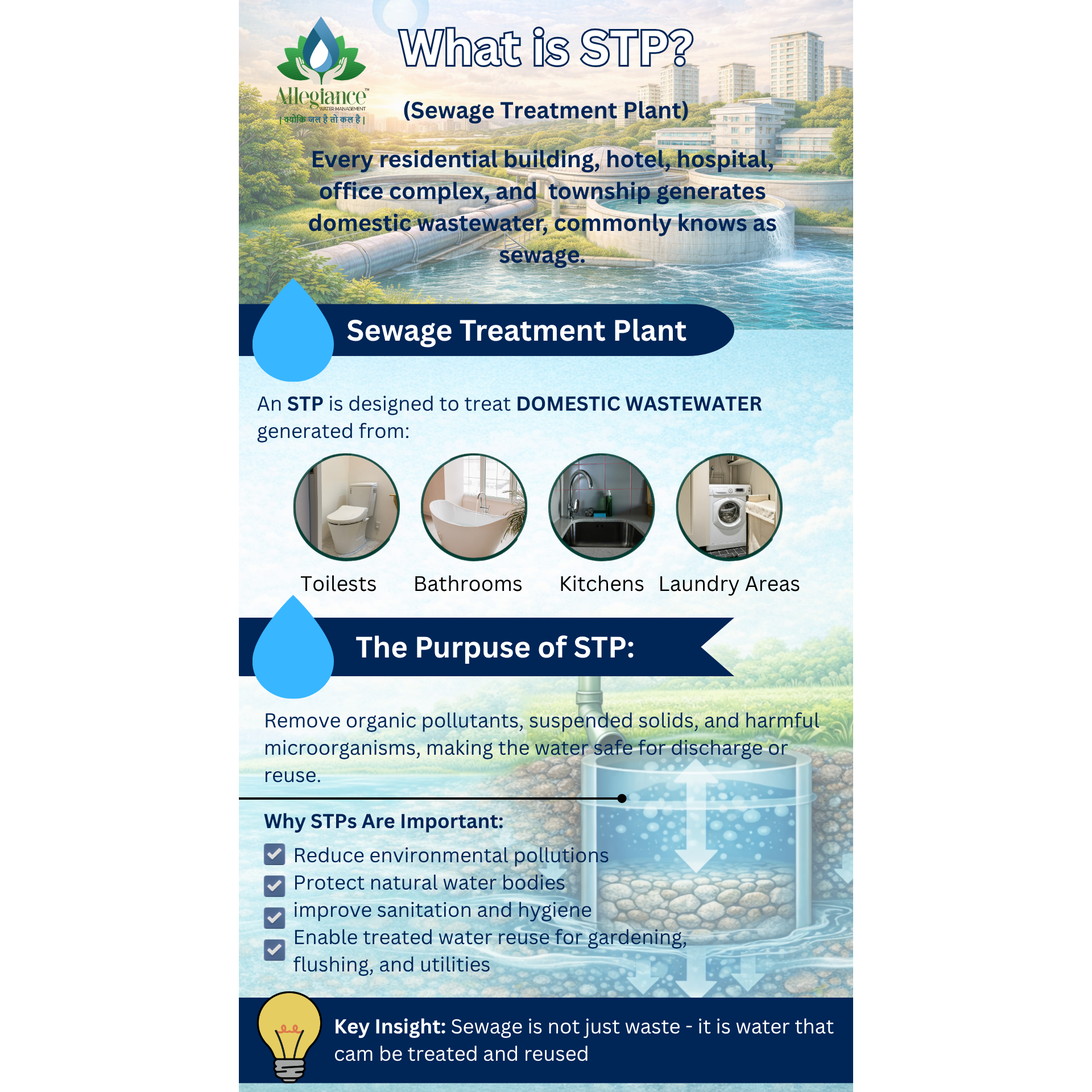
A Sewage Treatment Plant (STP) is a system designed to treat domestic wastewater generated from residential buildings, hotels, hospitals, office complexes, and townships. This wastewater, commonly known as sewage, contains organic pollutants, suspended solids, and harmful microorganisms that must be removed before the water can be safely discharged or reused.
STP plays a crucial role in water management, environmental protection, and water reuse.
Sources of Domestic Wastewater
Domestic wastewater treated in an STP typically comes from:
- Toilets
- Bathrooms
- Kitchens
- Laundry Areas
This wastewater is treated through a proper treatment process to make it safe for reuse or discharge as per pollution control norms.
Purpose of Sewage Treatment Plant
The main purpose of an STP is to:
- Remove organic pollutants
- Remove suspended solids
- Remove harmful bacteria and microorganisms
- Reduce water pollution
- Make water safe for discharge or reuse
After proper treatment, water can be reused for gardening, flushing, cooling, and other utility purposes.
Why STP is Important
Installing a Sewage Treatment Plant is important because it:
- Reduces environmental pollution
- Protects rivers, lakes, and natural water bodies
- Improves sanitation and hygiene
- Helps in water conservation
- Enables treated water reuse
- Helps industries and buildings meet pollution control board compliance
Key Insight
Sewage is not just waste — it is water that can be treated and reused.
FAQs – Sewage Treatment Plant
1. What is STP water used for?
Treated STP water is used for gardening, flushing, cooling towers, and other utility purposes.
2. Is STP mandatory?
Yes, STP is mandatory for many residential societies, hotels, hospitals, and commercial buildings as per Pollution Control Board norms.
3. How does an STP work?
STP works by removing solids, organic waste, and harmful microorganisms through primary, secondary, and tertiary treatment processes.
4. Is treated water safe?
Yes, treated water is safe for non-drinking purposes like gardening and flushing.
5. Who needs an STP?
Apartments, townships, hotels, hospitals, industries, and commercial buildings typically require an STP.