
GROUNDWATER RECHARGE & WATERLOGGING CONTROL SYSTEMS”
By Allegiance Water Management® – Experts in Sustainable Rainwater Utilization
🌍 Recharging Groundwater. Restoring Balance.
India loses billions of litres of rainwater to drainage every monsoon — while groundwater tables drop and TD levels rise.
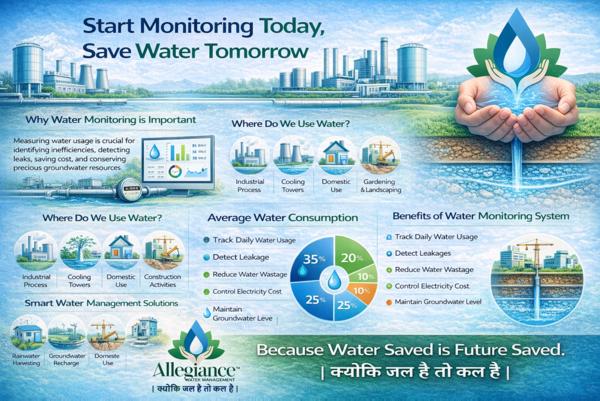
Allegiance Water Management® designs Recharge & Waterlogging Mitigation Systems that transform this lost water into a resource — improving both quantity and quality of your underground reserves.
⚙️ Our Core Solutions
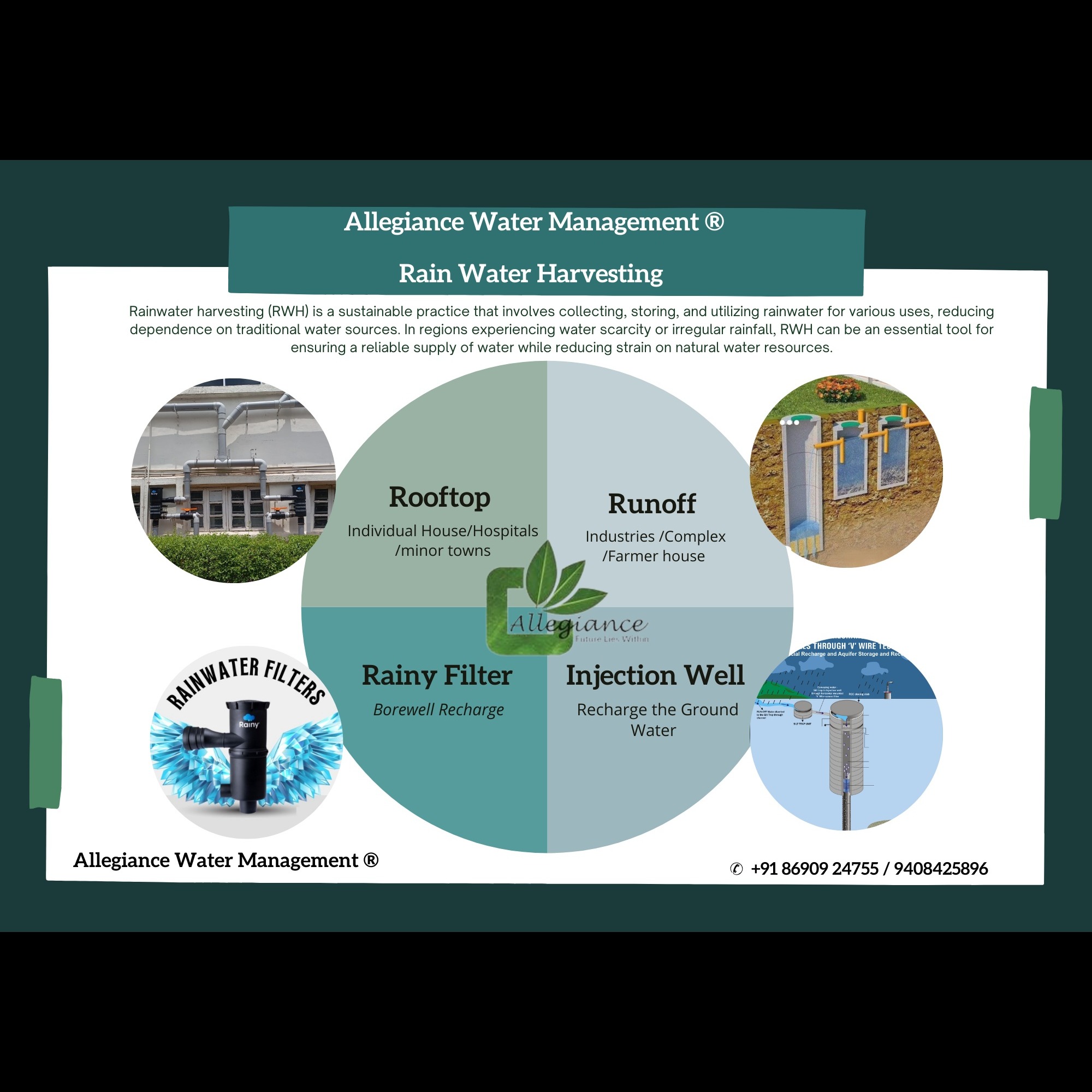
✅ Percolation & Recharge Wells – Custom-designed for site conditions to enable deep infiltration.
✅ Rooftop & Surface Runoff Integration – Diverts stormwater into engineered recharge points.
✅ Filter + Sand Media Layers – Trap silt, suspended solids, and TDS contamination.
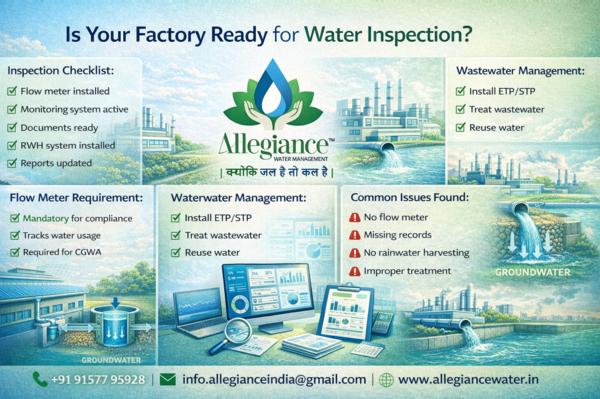
✅ Flow Meter Integration – Track recharge rates and water movement.
✅ Waterlogging Control Modules – Prevent surface flooding and protect basements, roads, and plant areas.
📊 Key Performance Benefits
Parameter Before Implementation After Allegiance RWH System
Groundwater TDS 1000–1800 ppm Reduced to 400–800 ppm
Borewell Yield 30–50% efficiency Up to 90% restored yield
Waterlogging During Monsoon Frequent Controlled or eliminated
Tanker Dependency High Reduced 60–80%
ROI (Payback) — 1–2 Monsoons
💰 Cost Summary – Real Value for Long-Term Saving
System Type Typical Range (INR) Remarks
Individual Residence ₹25,000 – ₹45,000 1 Filter + 1 Recharge Pit
Apartment / Society ₹1.25 – ₹4 Lakh Multiple Filters + Recharge Wells
Industrial Plant ₹3.5 – ₹10 Lakh Recharge Shaft + Flow Meter + Monitoring
Institutional / Govt Project ₹8 – ₹25 Lakh Fully Automated, Large Volume Recharge
🔹 Installation Cost depends on area, rainfall, soil percolation rate, and TDS level of existing water.
🧠 FAQs – Groundwater Recharge & TD Control
Q1. How does recharge help reduce TDS?
Rainwater (naturally low in dissolved solids) seeps into the aquifer, diluting saline or hard water zones over time — improving borewell quality.
Q2. Can recharge systems work in areas with clay soil or low percolation?
Yes — Allegiance designs multi-stage filtration shafts with sand, pebbles, and pressure relief pits to ensure proper vertical percolation even in low-infiltration soils.
Q3. What’s the ideal depth for recharge wells?
Typically 15–40 ft for domestic sites and 60–120 ft for industrial zones — customized after site assessment.
Q4. Is maintenance expensive?
The system uses self-cleaning SS (Stainless Steel) material for the main components of the rooftop rainwater harvesting unit,
which significantly reduces the need for frequent or costly upkeep.
Q5. Will it help in CGWA compliance?
Absolutely. Allegiance provides full technical documentation and CGWA-approved design support.
🌿 Why Choose Allegiance Water Management®
Proven Track Record with Industrial & Government Clients
Tailor-Made Designs for Every Soil, Site & Rainfall Pattern
Cost-Effective, Long-Life Systems (15+ Years Design Life)
On-Site Supervision, AMC & Compliance Reporting
#GroundwaterRecharge#RainwaterHarvestingSystem#TDSControl#WaterLoggingSolution#BorewellRejuvenation#CGWACompliance#SustainableWater#RainwaterReuse#AllegianceWaterManagement#IndustrialWaterManagement#SaveEveryDrop#RainwaterIndia
📞 Contact Allegiance Water Management®
🌐 www.allegianceindia.in
📱 +91-86909 24755