

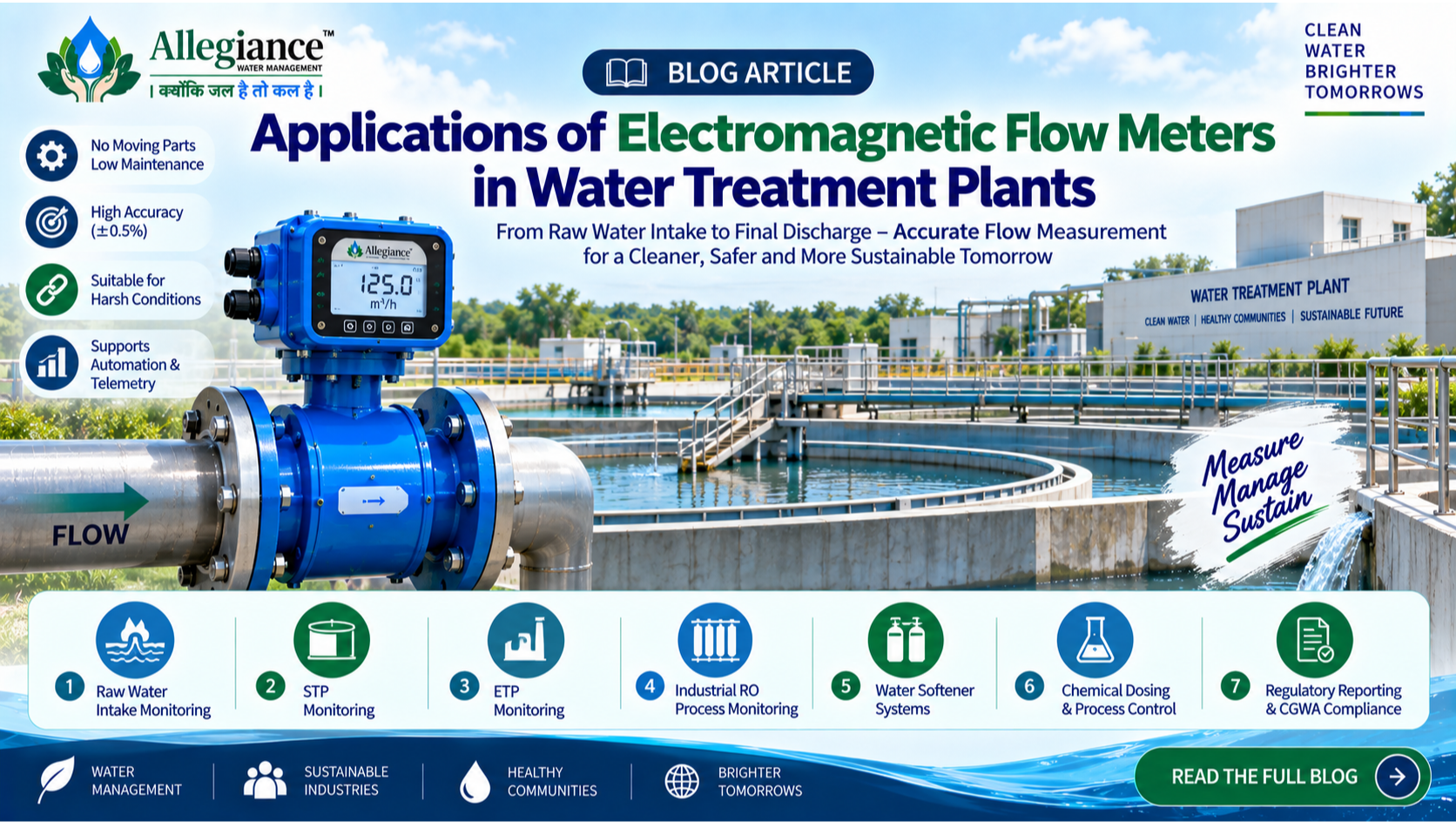
Water and wastewater treatment
plants depend on precise flow data at every stage of the process, from raw
water intake to final discharge. The electromagnetic flow meter has
become the standard instrument for this purpose across treatment facilities.
This guide explains where and how electromagnetic flow meters are applied
within water treatment plants.
Why Treatment Plants Rely on Electromagnetic Flow Meters
Water treatment processes
involve continuous flows of conductive liquids through pipelines of varying
sizes, often carrying suspended solids or chemical additives. Electromagnetic flow meters measure this flow using Faraday's Law of Electromagnetic Induction,
with no moving parts inside the flow path. This makes them highly suited to
treatment plant conditions where mechanical meters would quickly wear down or
clog from solids in the water.
Application 1: Raw Water Intake Monitoring
At the entry point of a
treatment plant, electromagnetic flow meters measure the volume of raw water
drawn from a river, borewell, or reservoir. This reading forms the baseline for
the entire treatment process and is often the figure reported for CGWA compliance
when the source is groundwater.
Application 2: Sewage Treatment Plant (STP) Monitoring
Within a Sewage Treatment
Plant, electromagnetic flow meters track influent flow entering the plant and
effluent flow leaving after treatment. This data helps operators size treatment
stages correctly, verify that the plant is operating within its designed
capacity, and confirm that treated water meets reuse or discharge standards
based on volume and quality checks.
Application 3: Effluent Treatment Plant (ETP) Monitoring
Industrial Effluent Treatment
Plants use electromagnetic flow meters to measure wastewater flow at multiple
points, including inlet, intermediate treatment stages, and final discharge.
Since ETP effluent often contains chemicals or varying conductivity levels, the
flow tube material, typically SS304 with SS316L electrodes, is selected to
withstand corrosive conditions while maintaining accurate readings.
Application 4: Industrial RO Plant Process Monitoring
In Industrial RO plants, flow
meters monitor feed water entering the reverse osmosis membranes as well as the
permeate and reject streams exiting the system. Accurate flow measurement at
each stage helps operators track membrane performance, recovery rate, and
overall system efficiency, flagging early signs of fouling or scaling before
they affect water quality.
Application 5: Water Softener Systems
Water softener units use flow
monitoring to determine when resin beds require regeneration, based on the
total volume of hard water processed. Electromagnetic or battery-operated flow
meters integrated with the softener system automate this trigger, reducing
manual monitoring and ensuring consistent water quality output.
Application 6: Chemical Dosing and Process Control
Accurate flow readings allow
treatment plants to calculate correct chemical dosing rates for coagulation,
disinfection, or pH correction. Flow transmitters with 4-20 mA output or RS485
MODBUS communication can feed live data directly into dosing pump controllers,
keeping chemical addition proportional to actual flow rather than fixed
estimates.
Application 7: Regulatory Reporting and CGWA Compliance
Treatment plants extracting or
discharging significant volumes of water are often required to maintain
CGWA-compliant flow monitoring with IoT-based telemetry. Electromagnetic flow
meters paired with telemetry devices transmit real-time extraction and discharge
data, supporting water audits and NOC compliance without manual logbook
entries.
Choosing the Right Meter for Treatment Applications
Treatment plant applications
vary widely in pipe size, liquid conductivity, and required accuracy, with
electromagnetic flow meters available in line sizes from 15 NB to 1000 NB and
accuracy within 0.5 percent of full scale. Selecting the correct flow tube
lining, electrode material, and output configuration for each application point
ensures reliable, long-term performance across the plant.
Conclusion
From raw water intake to final
effluent discharge, electromagnetic flow meters play a central role in keeping
water and wastewater treatment plants efficient, compliant, and
well-controlled. Their accuracy, durability, and compatibility with modern
telemetry systems make them a foundational instrument across every stage of the
treatment process.